AI Developer Tools: A 2026 Framework for Evaluating the Stack
September 14, 2026
Reza Vatani
11 min read

AI developer tools stopped being one tool a while ago. Most engineering teams now run a coding assistant, an AI code reviewer, some flavor of AI-assisted testing, and AI-ranked security scanning, often from four different vendors that have never spoken to each other. Abloomify exists to answer the question none of those vendors can: is the stack, as a whole, actually paying off.
Key Takeaways
Q: What are AI developer tools?
A: Software that uses large language models somewhere in the software delivery lifecycle, not just to write code. In 2026 that spans coding assistants (Cursor, Claude Code, GitHub Copilot), AI code review, AI-assisted testing, and AI-ranked security and dependency scanning.
Q: What categories make up the 2026 AI developer tools stack?
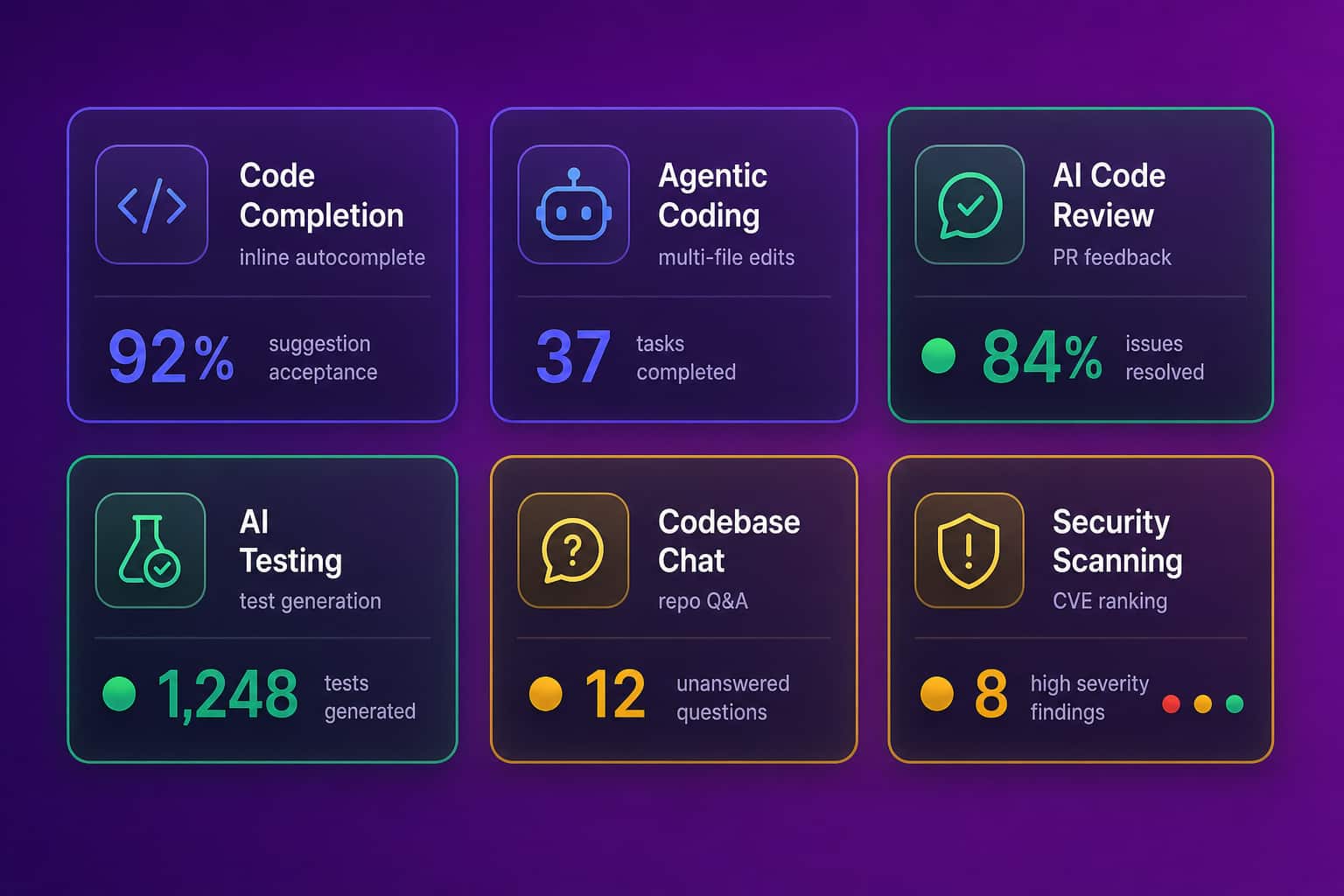
A: Six show up most often: code completion, agentic coding, AI code review, AI-assisted testing, codebase chat, and AI-ranked security or CI/CD signals. A typical 50-plus engineer team already runs tools from at least three of these without a single combined view of them.
Q: How do you measure ROI on AI developer tools?
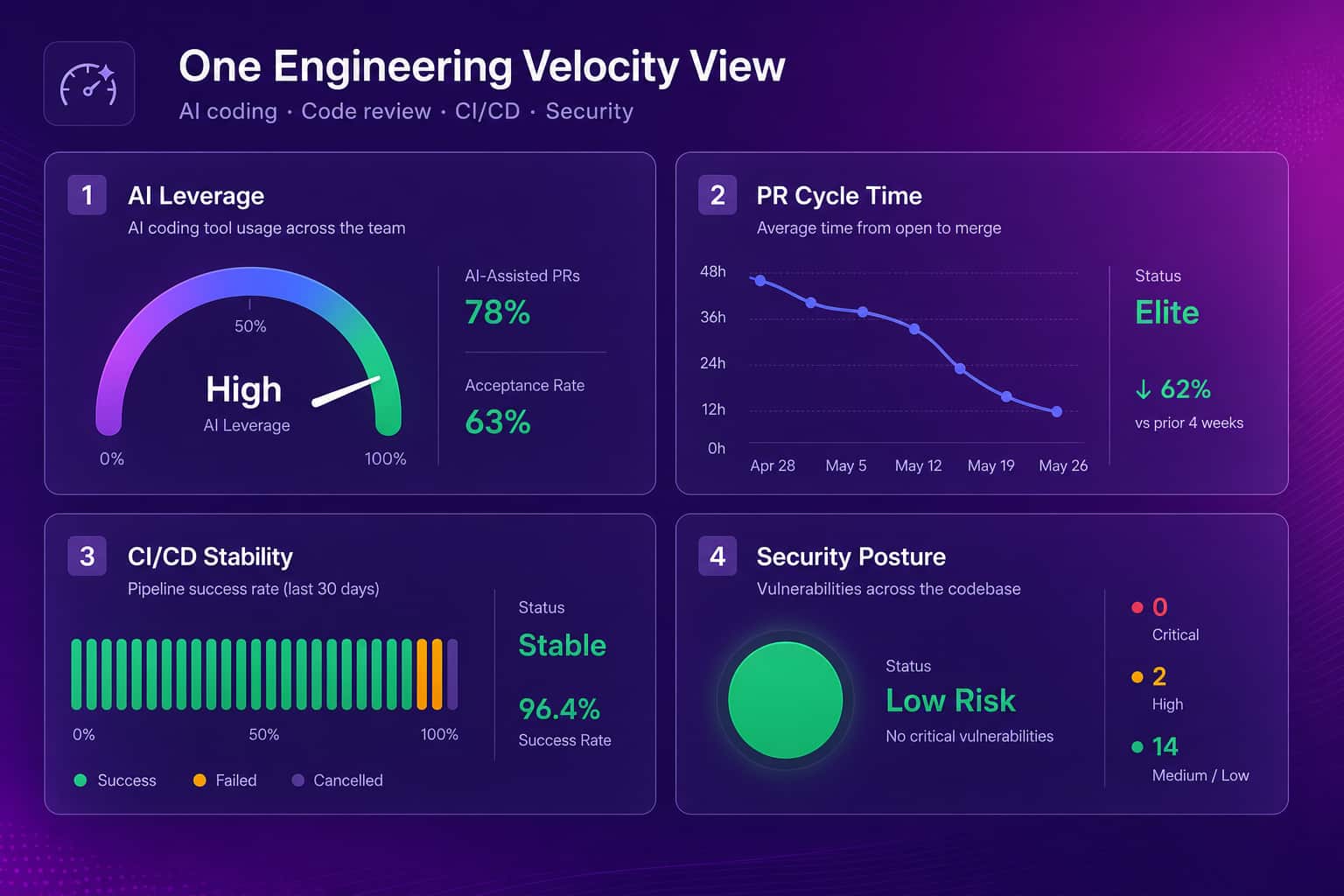
A: Stop measuring one tool at a time. Abloomify imports usage from Cursor, Claude Code, and GitHub Copilot, then correlates it with PR cycle time, review health, and delivery output, with AI Leverage as a pillar of a single Engineering Velocity Score covering the whole stack.
Q: Do more AI developer tools mean faster delivery?
A: Not by default. Overlapping tools fragment the usage signal and duplicate license spend, the same waste pattern that already costs midmarket tech companies $50K-$100K a year in unused SaaS seats. More tools without a shared measurement layer usually means more invoices, not more velocity.
Q: How does Abloomify fit into an AI developer tools stack?
A: As the layer that sits above the individual tools. It pulls usage and delivery signals from GitHub, Jira, and the AI coding tools themselves, computes DORA metrics, CI/CD health, and security posture alongside AI-tool ROI, and does it PII-free, with no code content read and no screenshots.
What counts as an AI developer tool in 2026?
An AI developer tool in 2026 is any product that puts a large language model somewhere in the path between an engineer and shipped software, and the category has quietly widened well past code completion. The tightest definition, coding assistants, covers completion (GitHub Copilot) and agentic multi-file editors (Cursor, Claude Code). But the same pattern, a model reading context and producing a judgment or an edit, now shows up in code review (an AI comment on your pull request before a human looks), in testing (a model drafting unit tests from a diff), and in security (a model or a scoring system ranking which of your 40 open CVEs to fix first). Engineering leaders who still think of "AI developer tools" as a synonym for "the Copilot line item" are underscoping their own risk and their own opportunity, because the tools multiplying fastest right now are not the ones writing code, they are the ones judging it. For the coding-assistant layer specifically, see our guide to AI coding tools and our deep dive on agentic AI coding tools. This piece is about the wider stack those tools sit inside.
The practical reason the distinction matters is procurement and measurement, not semantics. A VP of Engineering evaluating "an AI coding tool" is making one buying decision. A VP of Engineering evaluating "the AI developer tools stack" is managing five or six overlapping subscriptions, each billed differently, each reporting its own usage numbers in its own console, none of them talking to the others.
The AI developer tools stack most teams already have
Most engineering teams already run an AI developer tools stack, they just have never inventoried it as one, and that gap is exactly where budget and risk hide. A typical 2026 stack looks like this: GitHub Copilot or Cursor for authoring, an AI reviewer like CodeRabbit or Graphite commenting on pull requests (see our roundup of code review tools for the full field), GitHub's Dependabot or code scanning ranking vulnerabilities by exploit probability, and CI/CD tooling flagging flaky tests before anyone opens a ticket. Individually, each tool clears its own bar, engineers like the completion, the reviewer catches real bugs, security gets a ranked list instead of a raw CVE dump. Collectively, almost nobody at the company can answer what the stack costs per engineer, which pieces overlap, or whether the combination moves the delivery metrics leadership actually reports upward.
That gap is not a hypothetical. Abloomify already tracks CI/CD pipeline health with flaky-test detection and security posture from Dependabot and code scanning, ranked by CVSS severity and EPSS exploit probability, in the same platform as PR flow and delivery metrics. When those signals live next to AI coding tool usage instead of in four separate vendor logins, the stack stops being a pile of subscriptions and starts being one system you can actually manage.
Why measuring one tool at a time misses the real question
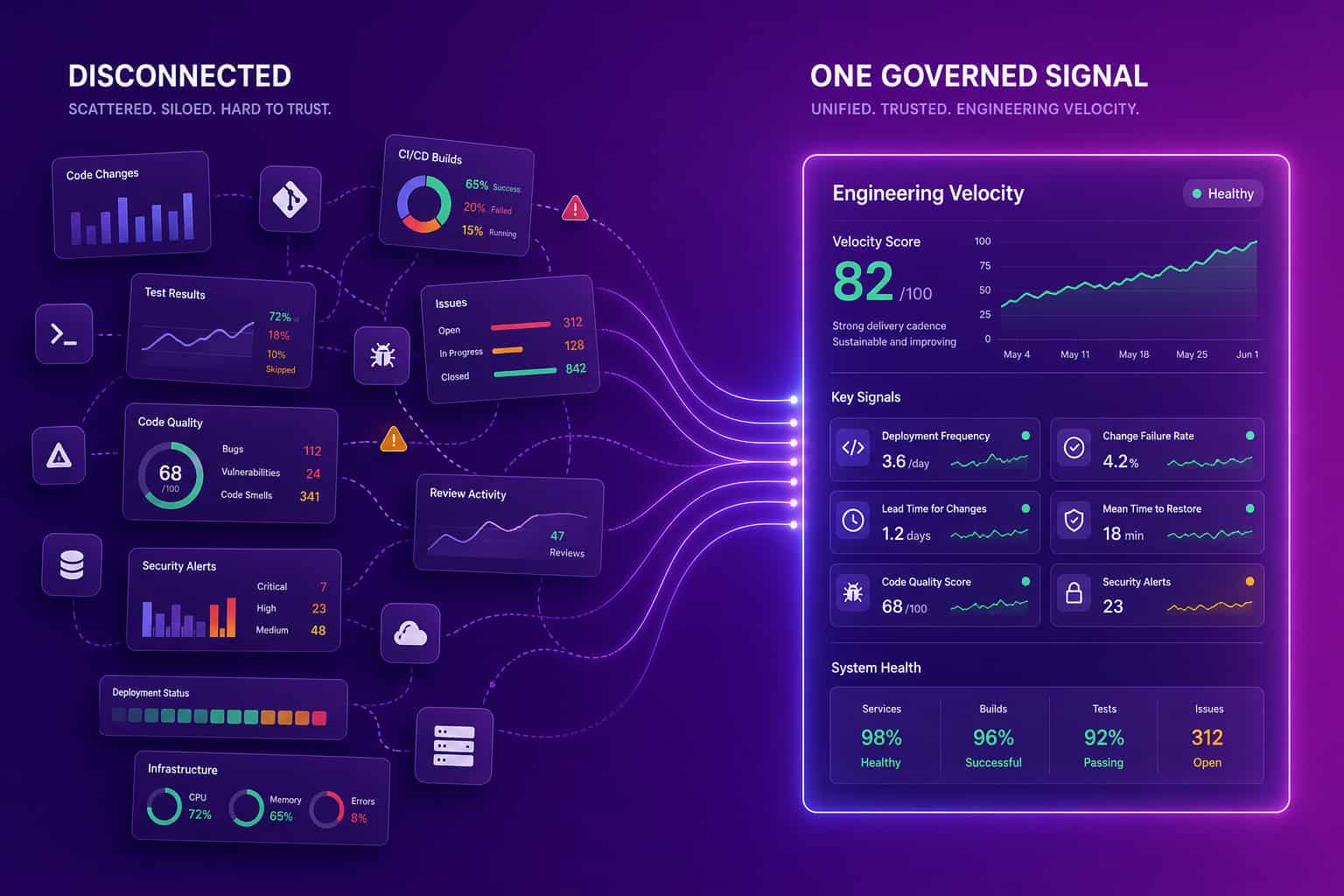
Measuring AI developer tools one vendor at a time misses the question a board actually asks: is our AI tooling spend, in total, buying us anything? Each vendor's own dashboard will tell you your acceptance rate on Copilot suggestions, or how many issues your AI reviewer flagged last month, and both numbers can be true and still tell you nothing about whether pull requests merge faster or whether the org is paying for three tools that do overlapping jobs. This is the same failure mode as unmanaged SaaS spend generally: a $50K-$100K a year problem at a typical midmarket tech company, driven by nobody owning the full inventory. AI developer tools are newer, growing faster, and even less inventoried than the rest of the SaaS stack, which makes them a likely place for that same waste to be compounding right now, one AI-labeled line item at a time.
The fix is not fewer tools. It is one shared measurement layer that sits above all of them, so a renewal decision is based on correlated delivery data instead of five separate vendor usage reports that were never designed to talk to each other.
A framework for evaluating your AI developer tools stack
Evaluating an AI developer tools stack takes a different framework than picking a single coding assistant, because the unit of analysis is the whole toolchain rather than one product's feature list. Run it as five steps, in order, and most engineering orgs surface at least one overlap or one dead seat on the first pass:
- Inventory what is actually connected. List every tool with access to your repositories, tickets, or CI pipeline, not just the ones procurement approved. Shadow adoption, an engineer connecting a personal AI tool to company code, is the most common gap.
- Map each tool to the SDLC stage it touches. Authoring, review, testing, security, or delivery. A stack with three tools stacked on authoring and nothing on security posture is unbalanced, whatever each tool's individual reviews say.
- Check for category overlap. Two agentic editors, or an AI reviewer plus a second tool doing the same job, split usage data and double the invoice without doubling the value.
- Connect the stack to one delivery signal. PR cycle time, review wait, CI/CD stability, and security posture, read together, not per vendor console.
- Govern before you scale. Role-based access and audit logs on what each AI tool can see, so growing the stack does not mean growing the blast radius of a single compromised integration.
How Abloomify fits into an AI developer tools stack
Abloomify sits above the individual AI developer tools rather than replacing any of them, importing usage signals from Cursor, Claude Code, and GitHub Copilot and correlating them with the delivery data those tools are supposed to improve: PR cycle time, review health, DORA metrics banded Elite through Low, CI/CD pipeline stability, and security posture ranked by exploit probability. AI Leverage becomes one tunable pillar of a single Engineering Velocity Score, so a renewal conversation stops being "the vendor says adoption is high" and starts being a number tied to what actually shipped. The same layer separates human from AI agent contribution across code and reviews, which matters more every quarter agentic tools handle a larger share of authoring. None of this reads code content. It is PII-free by architecture, API-connected, SOC 2 Type II certified, the same standard applied to every data source Abloomify touches.
The governance side matters as much as the measurement side once a stack grows past two or three tools. Abloomify's AI governance layer adds shadow AI detection, role-based access, and audit logs, so security and IT can see what is connected to company data without engineers losing access to tools that make them faster. And through External AI Access, the same company knowledge Abloomify already holds becomes available inside the AI tools engineers already use, so the stack gets smarter instead of just bigger.
Buying and renewal checklist for AI developer tools
Buy and renew AI developer tools against evidence, not the vendor's own usage report, because every AI dev tool vendor has a structural incentive to report adoption as high. Before a renewal, pull the tool's usage data next to your own delivery metrics for the same window: did PR cycle time move, did review wait change, did rework go up or down. If a tool cannot show correlation with any of those, it is a candidate to cut regardless of how the vendor's dashboard reads. Before adding a new tool, check the inventory from the framework above for overlap first. And treat DORA metrics as the shared scoreboard: our guide to DORA metrics covers the four bands Abloomify computes straight from GitHub, and they are a fair, tool-agnostic yardstick for whether any part of the AI developer tools stack is earning its seat.
Vendors will keep shipping new categories of AI developer tools faster than any team can evaluate them one at a time. The teams that win are not the ones with the most tools. They are the ones who can say, in one number, what the whole stack bought them this quarter.
FAQ
What are AI developer tools?
AI developer tools are software that uses large language models somewhere in the software delivery lifecycle: writing code, reviewing it, testing it, scanning it for vulnerabilities, or answering questions about a codebase. Cursor, Claude Code, and GitHub Copilot are the best known, but AI now touches code review, CI/CD, and dependency scanning too.
What's the difference between AI coding tools and AI developer tools?
AI coding tools is the narrower term for tools that help write code: completion, agentic editors, codebase chat. See our dedicated guide to AI coding tools for that layer. AI developer tools is the wider category, adding AI-assisted code review, test generation, CI/CD health, and security scanning, the tools around the code, not just in it.
How much do companies spend on AI developer tools?
There is no single published figure Abloomify can cite, and most companies do not track it either, because spend sits scattered across five or more vendor invoices. That is closer to the problem than the answer: SaaS license waste already runs $50K-$100K a year at a typical midmarket tech company, and an ungoverned AI tool stack is where that waste is hiding today.
How do you measure ROI across an AI developer tool stack?
Stop scoring each tool in isolation and connect the whole stack to one delivery signal. Abloomify imports usage from Cursor, Claude Code, and GitHub Copilot and correlates it with PR cycle time, review health, CI/CD stability, and security posture, with AI Leverage as a tunable pillar of a single Engineering Velocity Score, so the stack gets one verdict instead of five vendor dashboards.
Does running many AI developer tools create security or compliance risk?
It can, mainly through shadow adoption: engineers connecting tools to source code or tickets without security or IT ever approving the connection. The fix is visibility and governance, not a ban. Abloomify's AI governance layer adds role-based access, audit logs, and shadow AI detection, PII-free, so oversight does not have to mean blocking engineers from tools that help them.

Reza Vatani
Co-Founder & CAIO
AI-driven entrepreneur with a strong background in robotics and advanced analytics. PhD from Old Dominion University and former Product Development leader at Nasdaq Verafin.