360 Degree Feedback: Questions, Examples, and Where It Breaks
November 27, 2026
Amir Tavafi
15 min read

360 degree feedback is a review method where a person gets input from their manager, peers, direct reports, and themselves, instead of from the manager alone. It is one of the better tools for showing someone how they work with other people. It is also one of the easiest to misuse. At Abloomify, our performance reviews include self, peer, upward, and downward feedback next to real work data, and this guide covers what I would keep and what I would change.
Key Takeaways
Q: What is 360 degree feedback in simple terms?
A: It is feedback about one person collected from the people around them: their manager, a handful of peers, their direct reports if they manage anyone, and their own self-assessment. The results are combined into one report so the person can compare how they see themselves with how others see them.
Q: What are the main disadvantages of 360 degree feedback?
A: Raters only see part of the work, so the feedback reflects relationships as much as results. Friends go easy, rivals do not. Small teams make anonymity hard. Long forms cause rater fatigue. And when the 360 feeds pay decisions directly, people start trading favourable reviews.
Q: What questions should a 360 feedback survey ask?
A: Ask about specific, observable behaviour. "What should this person keep doing?" and "What is one thing that would make them easier to work with?" beat a 1 to 5 rating on "leadership." Keep it to eight to twelve questions, with a different short set for each rater group.
Q: How do you make 360 feedback fairer?
A: Pick raters who worked with the person during the period, keep peer and upward input anonymous, and read the comments next to observed work data. Abloomify pulls signals like delivery against plan and code review load PII-free from Jira, GitHub, calendars, and 100+ other tools, with no screenshots or keyloggers.
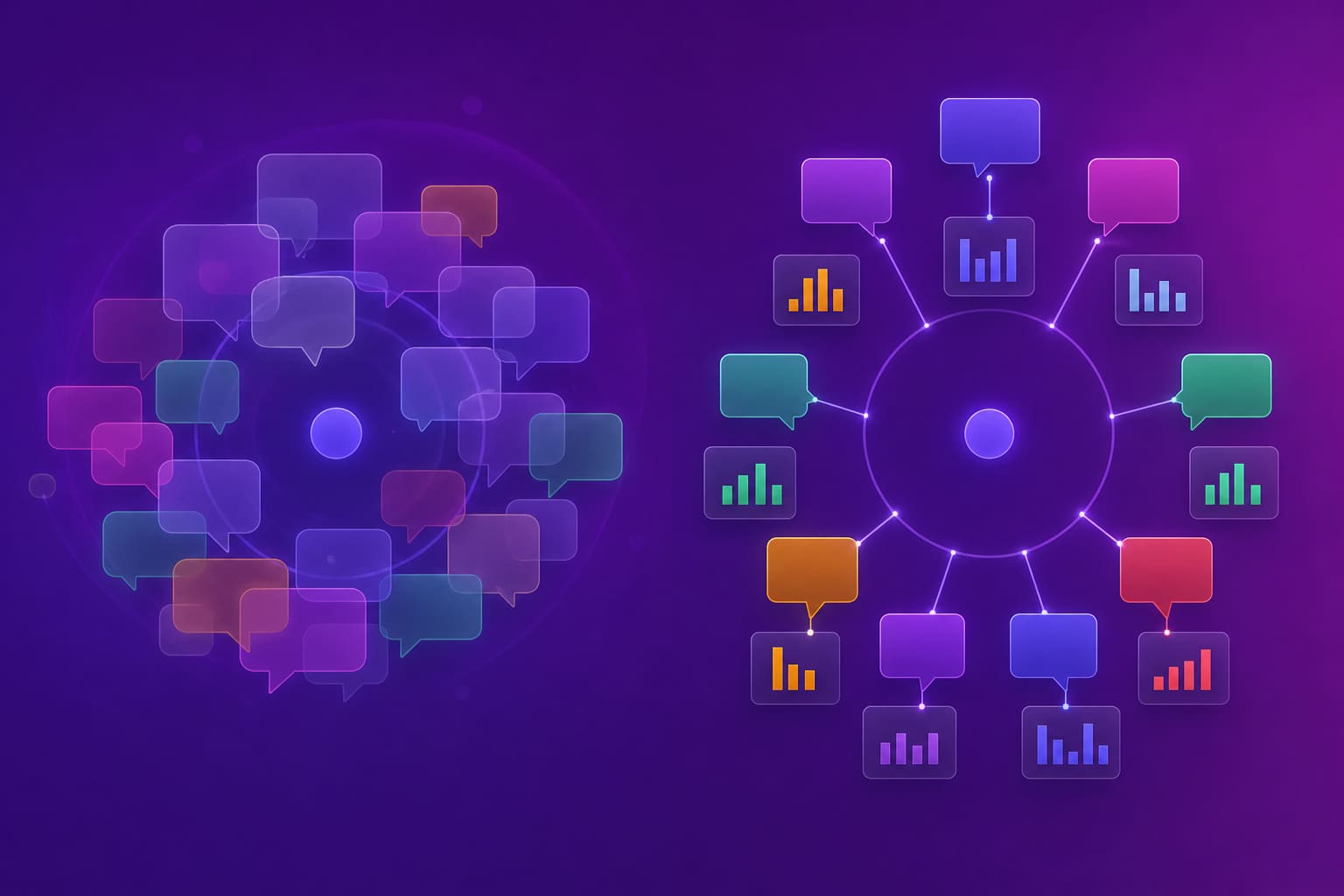
What is 360 degree feedback?
360 degree feedback is a structured review process in which one employee receives written and sometimes rated feedback from the people who work around them, usually their manager, several peers, any direct reports, and in many programs their own self-assessment, with the input collected through a short survey, combined into a single report, and then discussed with the employee so they can see where their own view of their work lines up with how colleagues experience it and where it does not, which makes it most useful for development conversations and much less reliable as a standalone score for pay or promotion. The name comes from the full circle of perspectives around the person.
Some companies call it a 360 review, multi-rater feedback, or multi-source assessment. Same idea.
The point of a 360 is coverage. A manager in a 200-person company might see a senior engineer in a weekly 1:1, a sprint review, and the occasional incident. The peers who review that engineer's pull requests, the product manager who works with them every day, and the two juniors they mentor all see different parts of the job. A 360 collects those parts.
What a 360 does well is show a person blind spots in how they behave. What it does badly is measure output, because most raters never saw the output in full. Keep that split in mind and most of the design choices below get easier.
Who gives feedback in a 360 review?
A 360 review typically collects feedback from four rater groups, the employee's direct manager, who sees goals, priorities, and results against plan, a small set of peers, who see day-to-day collaboration and how the person handles shared work, the employee's direct reports if they manage people, who see what it is actually like to be led by them, and the employee themselves through a self-assessment, and some companies add a fifth group of internal customers or cross-functional partners such as a product manager working with an engineering lead or a sales leader working with customer success. Each group sees something the others cannot.
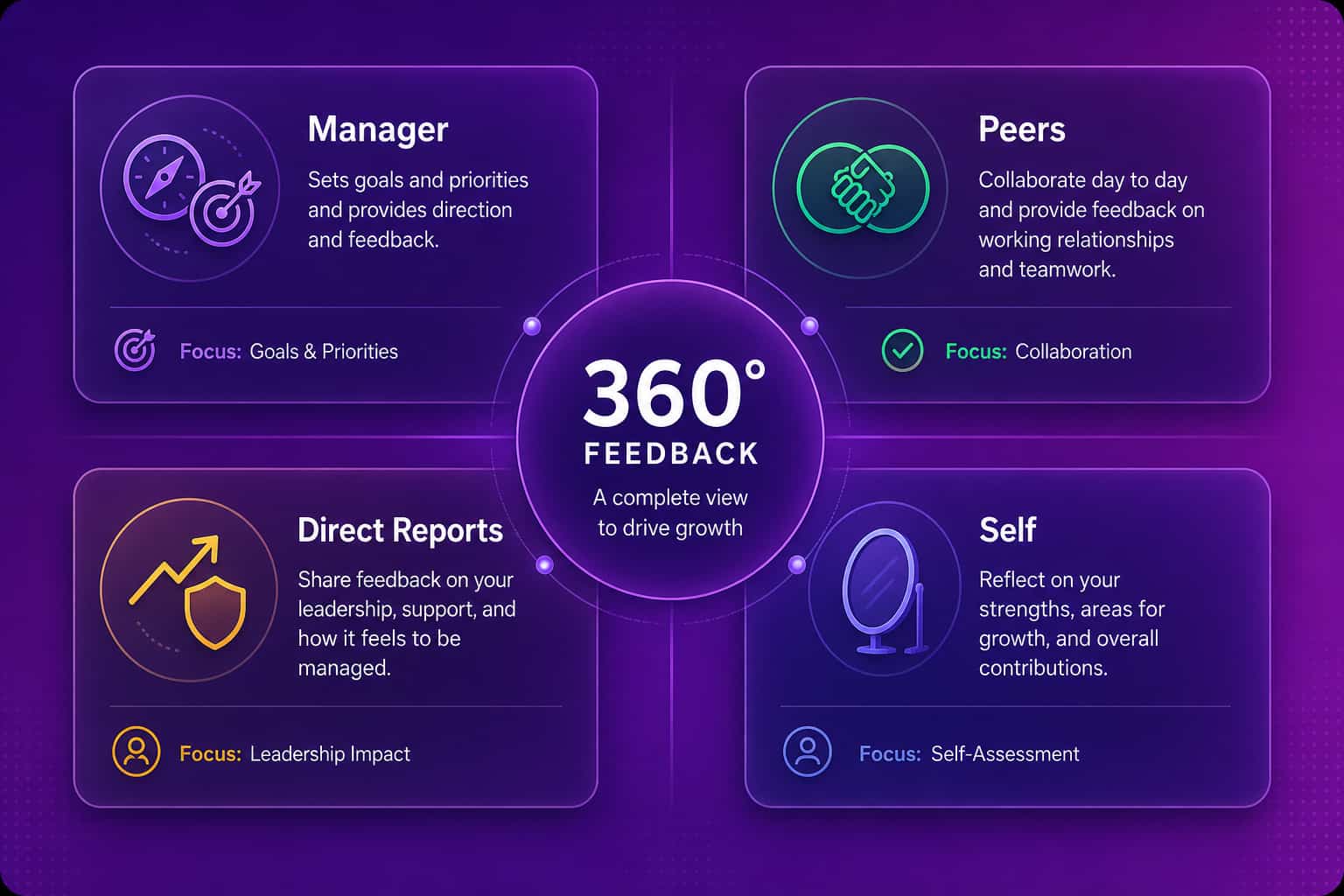
How I would pick raters for a 100 to 500 person tech company:
- The manager, always, and not anonymous.
- Three to five peers who worked with the person on real projects in the period. Not their friends, and not whoever happens to sit nearby.
- Every direct report, if the person manages people. Upward feedback is the part most managers dread and the part that teaches them the most.
- One or two cross-functional partners for roles that live between teams, like engineering managers, product managers, and team leads.
- The employee, last, so the self-assessment reads as reflection instead of an opening bid.
The person being reviewed can suggest raters. The manager should approve the final list. Otherwise people pick the colleagues they know will be kind.
360 degree feedback advantages and disadvantages
The main advantages of 360 degree feedback are that it shows a person how their behaviour lands with the people they work with, catches blind spots a single manager would miss, gives direct reports a safe channel to say what it is like to be managed by someone, and spreads the judgment across several people instead of resting on one relationship, while the main disadvantages are that raters only see slices of the work, personal relationships bend the scores, small teams make anonymity close to impossible, long surveys cause fatigue, and the whole thing turns political the moment it feeds directly into pay. Most of the disadvantages come from how a 360 gets used.
| Advantages | Disadvantages | |
|---|---|---|
| Coverage | Several perspectives instead of one manager's view | Each rater only sees a slice of the work |
| Bias | Dilutes any single manager's bias | Friendships, rivalries, and similarity bias show up in the scores |
| Upward feedback | Direct reports can speak about their manager | Reports fear being identified on small teams |
| Self-awareness | The gap between self and others is often the most useful finding | People with low self-awareness tend to dismiss the gap |
| Effort | Rich, written, specific input | Rater fatigue when ten people each fill in long forms |
| Use in pay | Adds context to rating discussions | Invites review trading and gaming once money is attached |
The criticism I hear most from COOs is that a 360 tells you how popular someone is. That is fair when the questions are vague. "Rate this person's leadership from 1 to 5" measures likeability. "Describe a time in the last six months this person unblocked your work" measures something closer to contribution, because the rater has to point at an event.
360 feedback questions and examples
Good 360 feedback questions ask raters to describe specific behaviour they actually saw during the review period, such as a time the person unblocked them, a habit that makes them easier or harder to work with, or one thing they should start doing next quarter, and they differ slightly by rater group so a peer is asked about collaboration while a direct report is asked about support and clarity, because abstract rating scales on traits like "leadership" or "communication" mostly capture how much the rater likes the person, while open questions tied to recent events produce comments the employee can actually act on. Eight to twelve questions in total is plenty.
Questions for peers:
- What is one thing this person does that makes your work easier?
- Describe a time in the last six months they helped unblock you or the team.
- What is one thing that would make them easier to work with?
- When you disagree with them, how does it usually go?
Questions for direct reports (upward feedback):
- Do you know what your top priority is right now, and did your manager help make it clear?
- What should your manager keep doing?
- What is one thing they could change that would help you do better work?
- Do you feel comfortable raising a problem with them early?
Questions for the manager:
- What did this person deliver against their goals this period?
- Where did they grow, and where are they stuck?
- What would they need to take on a bigger scope?
Questions for the self-assessment:
- What are you most proud of from this period, and what evidence shows it?
- Where did you fall short, and what got in the way?
- What do you want to learn or take on next?
Here are a few written examples, the kind of comment that helps versus the kind that does not.
| Weak 360 comment | Useful 360 comment |
|---|---|
| "Great team player!" | "When our release slipped in March, she picked up two of my code reviews the same day so I could fix the build." |
| "Needs to communicate better." | "I often learn about scope changes in standup instead of before. A short note in the channel when plans change would help." |
| "Strong leader." | "He tells us why a priority matters, not just what it is. I always know what to drop when something urgent comes in." |
| "Could be more strategic." | "In planning he jumps to implementation details early. I'd like to hear his view on which projects we should skip." |
If your managers want more prompts, our list of feedback questions for employees covers 1:1s and pulse surveys too.
How to run a 360 degree feedback process
Running a 360 degree feedback process well means deciding up front whether it is for development or for evaluation, choosing raters who actually worked with the person during the period, keeping the survey short and specific, protecting anonymity for peer and upward feedback by hiding any rater group with fewer than three responses, gathering observed work context alongside the survey so comments can be checked against what happened, and then having the manager walk the employee through the themes in a real conversation that ends with one or two development goals and a date to check progress. The report on its own changes very little. The conversation afterwards is the product.
- Decide the purpose and say it out loud. Development only, or one input into the review cycle. People write differently depending on the answer, so tell them.
- Choose raters. Employee suggests, manager approves, using the rules in the section above.
- Send a short survey. Eight to twelve questions, mostly open text, with a two-week window and one reminder.
- Protect anonymity. Aggregate peer and upward results, and do not show any group with fewer than three responses.
- Add work context. Pull goal progress and work signals for the same period before anyone reads the comments. More on this below.
- Hold the debrief. The manager summarises themes, not individual quotes, and the employee picks one or two things to work on.
- Follow up. Put those goals into regular one-on-one agendas and check them at the next cycle.
Once or twice a year is enough. More than that and you get the same comments copied forward.
Should 360 feedback be used for performance ratings?
360 feedback can inform performance ratings, but it should never decide them on its own, because each rater sees only part of a person's work and filters it through their relationship with them, so a 360 used as a score tends to measure visibility and likeability, while a 360 read next to goal progress and observed work signals such as delivery against plan, code review load, and collaboration reach across teams becomes much harder to game and much easier to trust, for the employee and for the calibration group that has to defend each rating. My rule is simple. The 360 tells you how someone works. The work data tells you what they got done. You need both before a rating means anything.
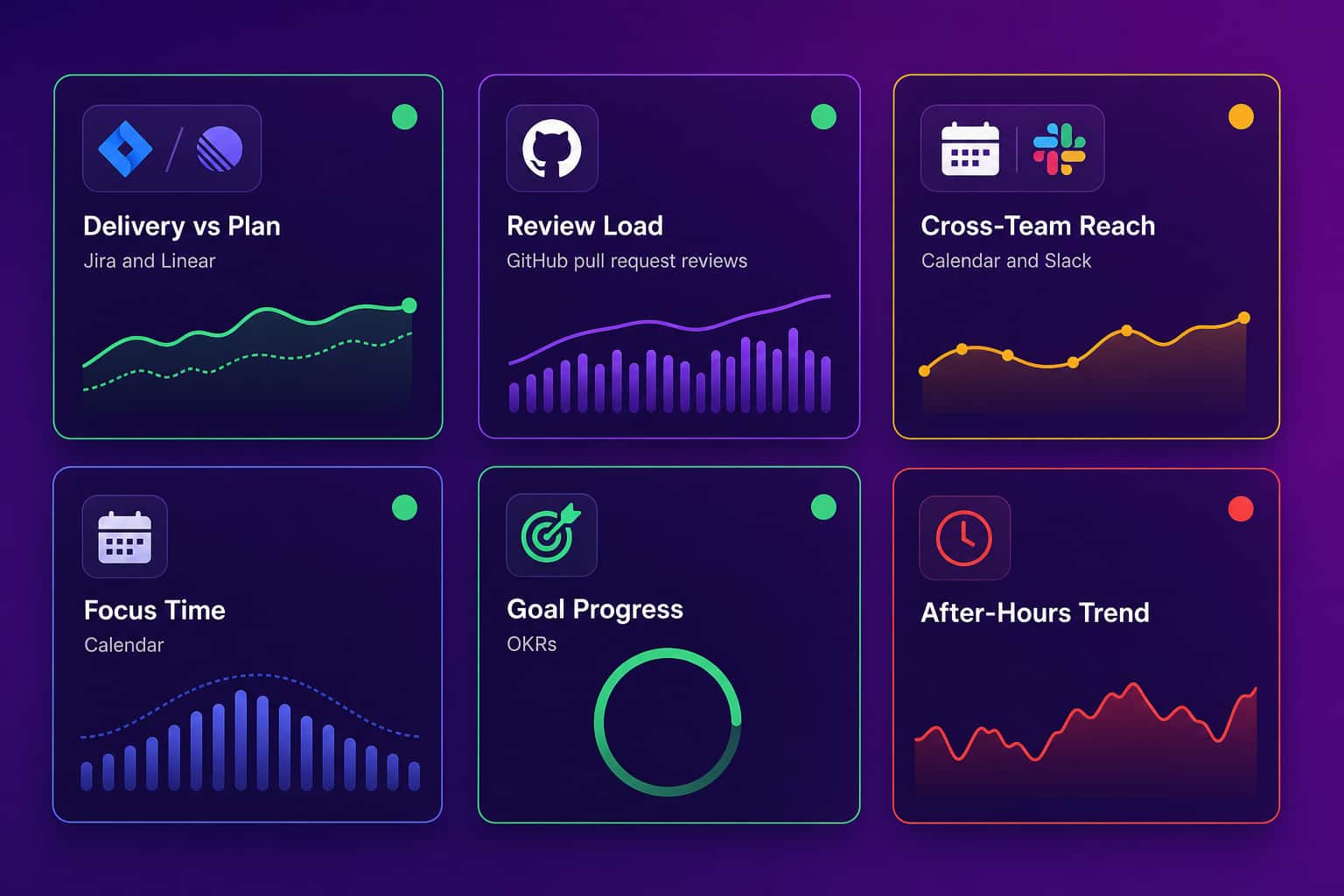
Here is how the signals line up with what a 360 typically asks:
| What the 360 says | Work signal to check it against | Source |
|---|---|---|
| "Always helps unblock others" | Code review load and time to first review | GitHub, GitLab, Bitbucket |
| "Delivers what they commit to" | Delivery against plan, goal progress | Jira, Linear, OKRs |
| "Works well across teams" | Collaboration reach across teams | Calendar, Slack, Teams |
| "Seems disengaged lately" | Focus time and after-hours trend | Calendar |
Sometimes the data backs the comment. Sometimes it flips it: the "seems disengaged" engineer turns out to be buried in after-hours incident work, which makes it a workload conversation. Either way, the manager walks into the debrief with something specific to talk about.
One caveat from our own customers. A 3,500-person enterprise started with Google Workspace data alone, and their COO told us they were seeing low correlation with internal performance metrics. A single source under-proves things like this, the same way a single manager's opinion does. That is why we connect 100+ tools instead of leaning on one.
This is how Abloomify's performance management is built. Self, peer, upward, and downward reviews, anonymous feedback, goals and OKRs, and engagement surveys sit next to work data from GitHub, Jira, calendars, and your HRIS. Everything comes in through API integrations, PII-free: no email content, no message content, no file content. Optional device agents report aggregated usage by application category and never take screenshots, log keystrokes, or record screens. Bloomy, our AI analyst, can draft a performance summary backed by delivery and collaboration data, so managers start the cycle with evidence instead of a blank form.
If you are rebuilding the whole review cycle, our guide on how to build fair performance reviews covers rating bias in more depth, and the 9 box grid piece covers what happens after ratings are in. Comparing platforms? Here is how we stack up against Lattice.
A 360 is a good mirror. It was never meant to be a scale.
FAQ
How many raters should a 360 review have?
Aim for the manager, three to five peers, every direct report if the person manages people, and a self-assessment. The number matters less than the mix. Pick peers who worked with the person on real projects during the period, and do not show results for any rater group smaller than three, or anonymity is gone.
Should 360 degree feedback be anonymous?
Peer and upward feedback should be anonymous or at least aggregated, because people soften criticism of a colleague or a boss when their name is attached. Manager feedback should not be anonymous. On small teams, true anonymity is hard, so group comments by theme and remove details that point to one person.
Should 360 feedback be used for pay and promotion decisions?
Use it as one input, never the deciding one. 360 feedback is strongest for development and weakest as a score. Raters see slices of the work and their own relationship with the person. Pair it with goal progress and observed work signals before it touches a rating, a raise, or a promotion.
How often should you run 360 degree feedback?
Once or twice a year is enough for most teams. Run it more often and raters get fatigued and start writing the same comments every time. Between cycles, lighter continuous feedback and regular 1:1s keep the conversation going without asking ten people to fill in a long form again.
What is the difference between 360 feedback and a performance review?
A traditional performance review is mostly the manager rating the employee against goals. 360 feedback adds peers, direct reports, and a self-assessment, so the person sees how they work with others. Many companies run both: the review covers what was delivered, the 360 covers how it was delivered.

Amir Tavafi
Co-Founder & CEO
Product leader and innovator with over 15 years of experience in the tech sector, grounded in AI and robotics. Previously led product development in fraud detection and AI solutions at Nasdaq Verafin.