Stay Interview: What It Is and How to Run One (2026)
November 3, 2026
Amir Tavafi
9 min read

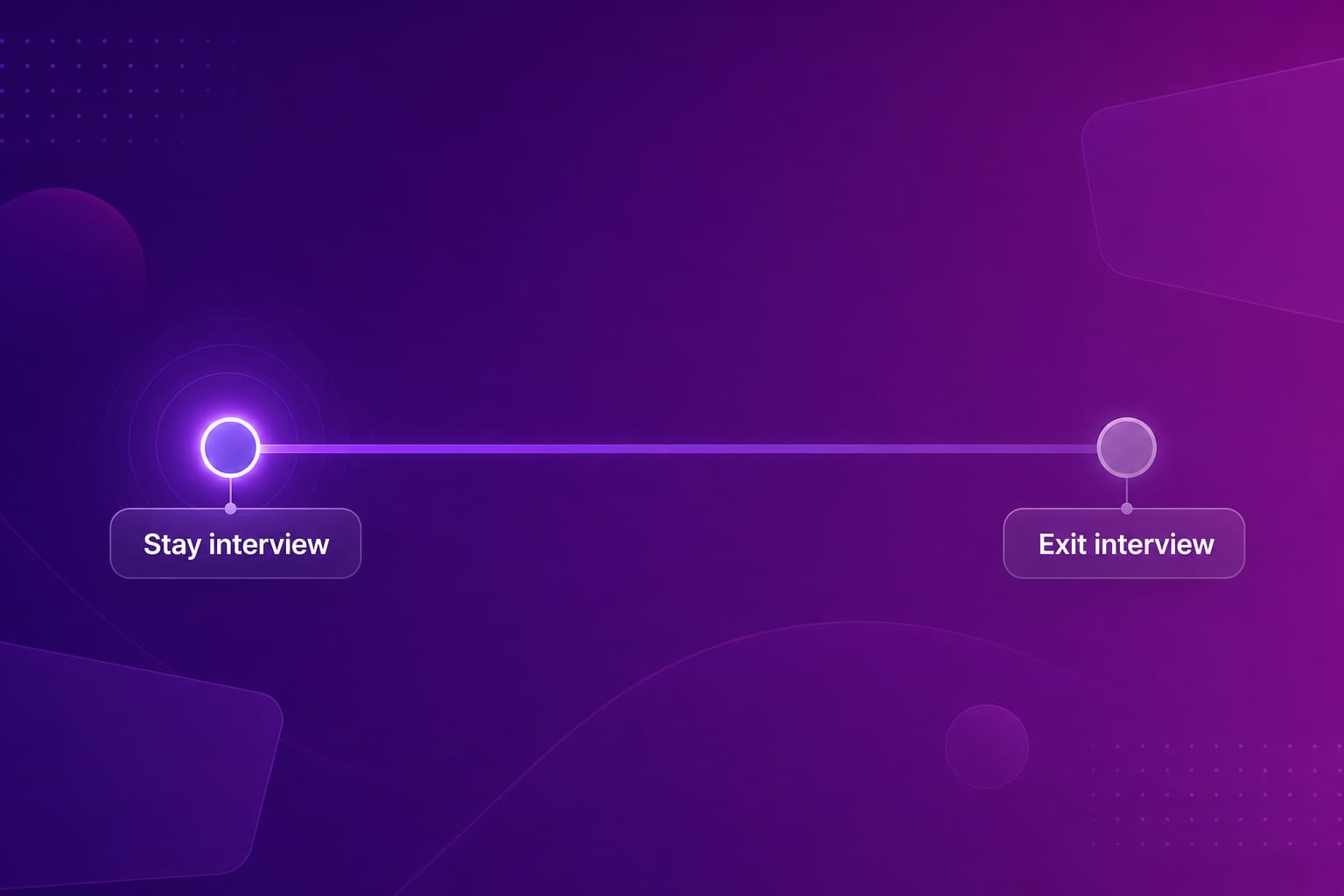
A stay interview is a short, structured conversation where a manager asks a current employee what keeps them at the company and what could make them leave. It happens while you can still change the answer. Most companies run exit interviews instead, after the resignation email lands, which gives you a great post-mortem and no chance to fix anything.
Key Takeaways
Q: What is a stay interview?
A: A stay interview is a one-on-one conversation, usually 30 to 45 minutes, where a manager asks an employee what they value about the job, what frustrates them, and what would pull them away. The goal is to act on the answers before the employee starts looking elsewhere.
Q: How is a stay interview different from a 1:1?
A: A weekly 1:1 covers work, blockers and priorities. A stay interview covers the person: what keeps them, what wears them down, and what a better version of their role looks like. Keep it as its own meeting so it does not get swallowed by status updates.
Q: Who should I hold stay interviews with first?
A: Start with high performers and anyone showing strain, such as sustained overload, rising meeting hours, or shrinking collaboration. Work signals can point you to these people. Abloomify tracks retention risk by department from PII-free work data, so you are not guessing from gut feel.
Q: What is the biggest reason stay interviews fail?
A: Managers ask the questions and then do nothing with the answers. If an employee names a problem and nothing changes within a few weeks, you trained them to stop telling you the truth. Only ask what you are prepared to act on.
What is a stay interview, and why does it beat the exit interview?
A stay interview is a planned conversation between a manager and a current employee about why they stay, what is pulling them away, and what would make the role better, held while the employee is still engaged enough to answer honestly. It borrows the format of an exit interview and moves it to the only moment it can help, which is before the resignation. An exit interview tells you which problems you had. A stay interview tells you which ones you still have, and for whom. The gap matters financially too. Our employee turnover cost calculator works from the commonly cited range of 50% to 200% of annual salary to replace one person, depending on the role. A 30-minute conversation is cheap next to that.
I think the exit interview gets too much credit. By the time someone is in one, they have already decided, and the polite answers they give (better opportunity, new challenge) are almost useless as data.
How do you run a stay interview, step by step?
Run a stay interview by picking the right person, setting expectations in advance, asking five to seven open questions, listening without defending, and agreeing on one or two concrete actions before the conversation ends. The structure matters because the setting is awkward by nature: you are asking someone to be candid with the person who controls their pay and their projects. Tell them a few days ahead that this is not a review and nothing they say will be used against them. Hold it somewhere other than your usual 1:1 slot. Take notes by hand if that helps, but say what you are writing down. Then follow up in writing within a week.
- Pick who goes first, and tell them why (they are valued, not suspected).
- Send a short heads-up that explains the purpose and the format.
- Ask the questions below, in roughly this order, and let silences run.
- Do not defend, explain or promise on the spot. Repeat back what you heard.
- Agree on one or two things you will change, and a date to check in.
- Write it up, share the summary with the employee, and then do the thing.
What questions should you ask in a stay interview?
The best stay interview questions are open, specific to the person, and aimed at the future rather than the past, such as what they look forward to on Monday, what would tempt them to take a recruiter call, and what they would change about their role if they could. Skip the yes/no questions and anything that sounds like a survey item. Five to seven questions is plenty, because two of the answers will usually take up most of the time. The list below is the version I would use, and you should drop whatever does not fit the person across from you.
- What do you look forward to when you start your week?
- What part of your job drains you the most?
- If a recruiter called tomorrow, what would they have to offer to get you to listen?
- What would make you leave, and is any of it already true?
- What do you wish you could do more of that you are not doing now?
- How do you like to be recognized, and have you been?
- What is one thing I could change about how I manage you?
The last one is the hardest to ask and often the most useful. Ask it anyway.
Who should get a stay interview first?
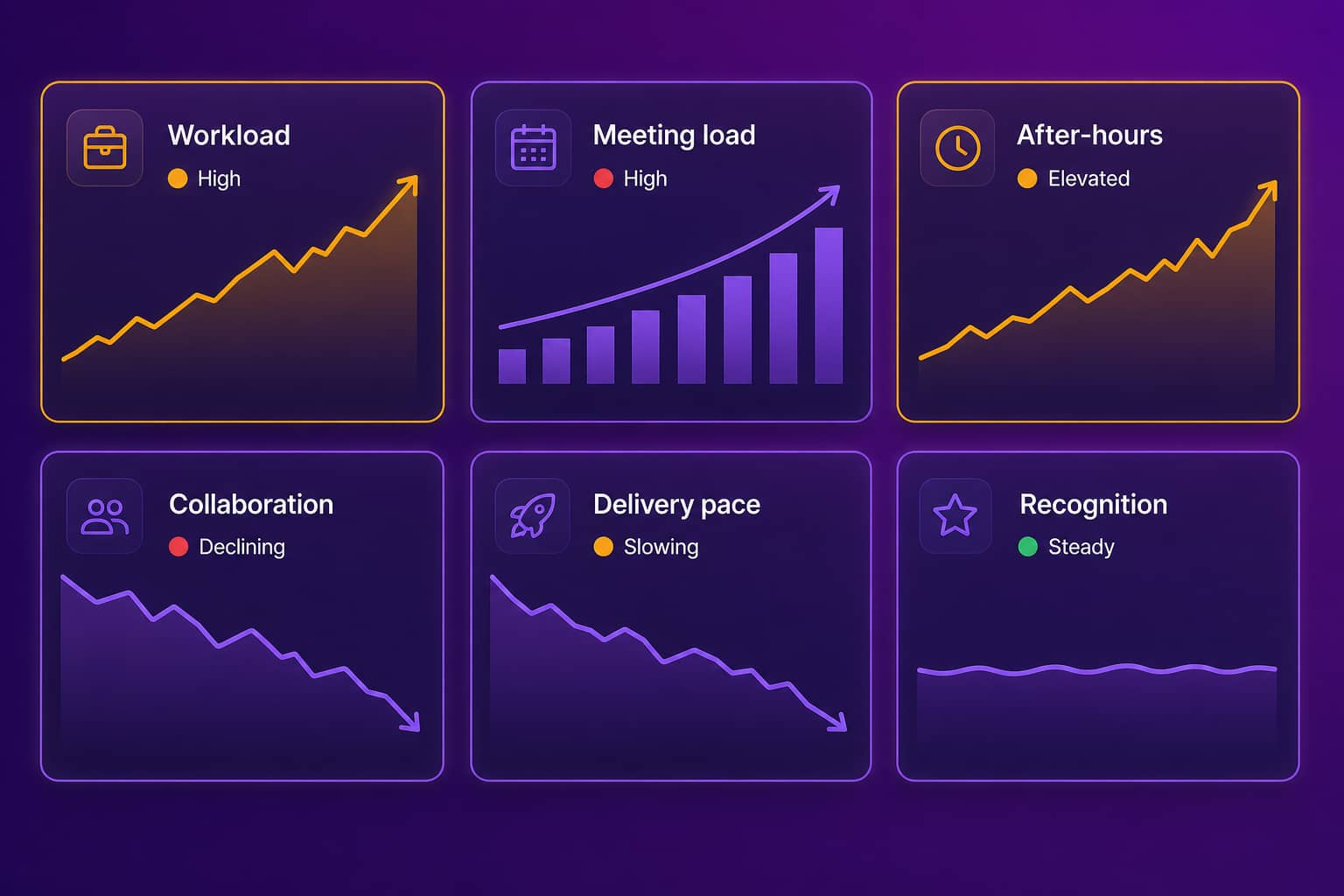
Start with the people you cannot afford to lose and the people who are visibly under strain, then widen the circle. Most managers pick based on who they remember, which skews toward the loudest and most recent. Work signals are a better starting point. Sustained workload above capacity, meeting hours creeping up, late-night activity rising, a shrinking collaboration network and slowing delivery are all patterns that tend to show up before someone says anything. Our solution page on burnout detection describes spotting burnout 60+ days early from work patterns, and the same signals feed flight risk detection.
None of this needs screenshots, keystroke logging or anyone's private messages. Abloomify is privacy-first, and the integration layer reads PII-free signals only, so no email, message or file content is involved. The point is to decide who to talk to, then have the conversation like a person would. Our longer piece on how to detect flight risk employees before they resign goes deeper on the signals.
What do you do with the answers?
Turn the answers into one or two specific changes per person, tell them what you are doing and by when, and look for patterns across the whole team after about ten conversations. The follow-through is the whole point. A person who says they are drowning in meetings and sees nothing change in a month has learned that candor is pointless. Some fixes are cheap: moving a recurring meeting, adjusting a project, naming a growth path. Others are not, such as pay or a promotion that is not available. Say so plainly. Employees can handle "I can't fix that this year" far better than silence.
Patterns matter as much as individual fixes. If six of ten people mention the same unclear priorities or the same overloaded team, that is a management problem to solve, and a stay interview is how you find it.
What mistakes make stay interviews backfire?
Stay interviews backfire when they are rushed, when the manager gets defensive, when nothing changes afterward, or when the conversation is secretly a performance review. Each of these teaches the employee that honesty is unsafe. Rushing is the most common one, since managers book 15 minutes between other meetings and get polite answers in return. Defensiveness is the second: the moment you explain why something is not your fault, you have ended the conversation. A third mistake is holding them only for people you already worry about, which makes the invite itself feel like a warning. If it is a normal part of how you manage, nobody reads into it. For more on building the habit, our one-on-one agenda guide covers how to keep regular 1:1s from crowding out the deeper conversations.
FAQ
How long should a stay interview take?
Plan for 30 to 45 minutes. Shorter than that and people give polite answers. Longer than that and the conversation drifts into a status update or a performance review. Keep it separate from your regular 1:1 so the employee knows this one is about them, not the work.
Who should run a stay interview, the manager or HR?
The direct manager is usually the right person, because the manager can act on what they hear. HR or a skip-level leader works better when the manager is the likely reason someone is thinking about leaving. Whoever runs it needs the authority to fix things.
How often should you hold stay interviews?
Once or twice a year for each person is a good rhythm. Hold one sooner for anyone showing flight risk signals, like sustained overload, shrinking collaboration, or a slowdown in delivery. Do not turn it into a quarterly ritual or it starts to feel like a survey.
What is the difference between a stay interview and an exit interview?
A stay interview happens while the employee is still here and you can change the outcome. An exit interview happens after they have resigned. Exit interviews are useful for spotting patterns, but the person is already gone. A stay interview is the only one of the two that can keep them.
Can work data help decide who to hold stay interviews with?
Yes. Workload, meeting load, after-hours activity and collaboration trends can show who is under strain before they say anything. Abloomify surfaces these patterns from PII-free work signals, so a manager can start with the people most likely to need the conversation, without reading anyone's messages or watching their screen.

Amir Tavafi
Co-Founder & CEO
Product leader and innovator with over 15 years of experience in the tech sector, grounded in AI and robotics. Previously led product development in fraud detection and AI solutions at Nasdaq Verafin.