Employee Turnover Cost Calculator: What It Costs to Lose Someone
August 20, 2026
Amir Tavafi
10 min read

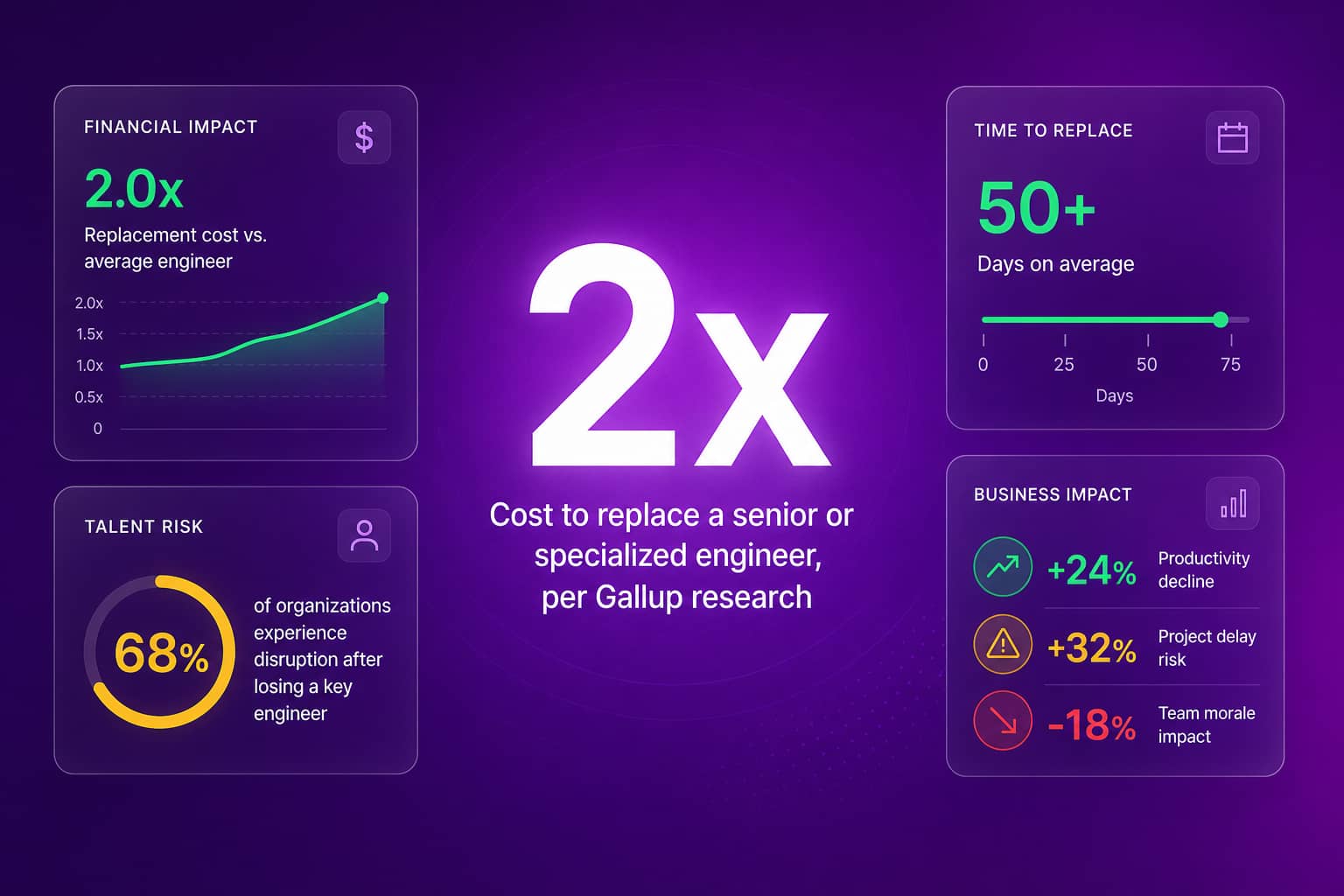
An employee turnover cost calculator turns a vague HR problem into a number a CFO has to respond to. Ours estimates direct costs (recruiting, onboarding) plus hidden costs (ramp time, lost knowledge) using Gallup's 0.5x-2x salary multiplier, and for most 100-500 person tech companies the total lands well into six or seven figures a year.
Key Takeaways
Q: How much does it cost to lose an employee?
A: Gallup research puts it at 0.5x to 2x annual salary, depending on the role. A $50K entry-level hire costs roughly $25K to replace; a $150K senior engineer can run $300K or more once ramp time and lost projects are counted. Our employee turnover cost calculator runs this against your actual headcount.
Q: What does an employee turnover cost calculator actually add up?
A: Direct costs (job postings, recruiter fees, interview hours, onboarding) plus hidden costs, which we estimate at roughly 30% on top of direct costs for lost productivity, training time, and the strain on the team absorbing the gap. Hidden costs are usually the bigger number and the one nobody puts in a spreadsheet.
Q: Why is the number worse for engineering teams specifically?
A: Senior and specialized roles sit at the top of the 0.5x-2x range, and a distributed engineering org's ramp time (getting a new hire to full context on the codebase) is measured in months, not weeks. A 15% annual turnover rate on 40 engineers at $150K average is a different order of magnitude than 15% on a 40-person ops team at $60K.
Q: Does more employee monitoring reduce turnover?
A: No evidence supports it. There's no evidence monitoring improves performance (Personnel Psychology meta-analysis), and 1 in 6 workers say they'd quit over being surveilled, which works against the number you're trying to shrink. The cheaper fix is catching strain in signals that already exist across the tools a team uses.
Q: What actually moves the number down?
A: Catching capacity overload and disengagement early enough for a manager to act, not after someone has already updated their LinkedIn. Abloomify customers using the AI People Manager to act on those signals see a 62% reduction in turnover, tied to earlier intervention rather than a new retention perk.
What the employee turnover cost calculator is estimating
Our employee turnover cost calculator takes your headcount, your annual turnover rate, and your salary bands, and returns a total annual cost plus a cost-per-departure figure you can put in front of a board. The math is Gallup's published replacement-cost research: entry-level roles run about 0.5x annual salary to replace, mid-level roles about 1x, and senior or specialized roles up to 2x, because they take longer to fill and longer to ramp. On top of that, the calculator adds roughly 30% for hidden costs (the empty-seat productivity gap, training time, and the extra load on the team covering the work). Most people who reach for a calculator like this already suspect turnover is expensive; what surprises them is which line item dominates. It's almost never the recruiter fee. It's the months a senior hire spends below full output while institutional knowledge that walked out the door gets slowly rebuilt from scratch.
A $30,000 SaaS company customer of ours put it this way when they first saw their own manual spreadsheet mirrored back automatically: "What I did manually this week in a spreadsheet is exactly what I think Abloomify should be doing automatically." Turnover cost is the same story. Most operations leaders have already done this math once, by hand, after a bad quarter. The calculator just makes it repeatable.
Why the number is usually an undercount at a tech company
Run the calculator with a tech company's actual numbers and the total tends to surprise even people who thought they already knew turnover was expensive. Salaries skew higher than the economy-wide averages the 0.5x-2x multiplier was built on, and specialized senior roles (a staff engineer, a platform lead, anyone with codebase context nobody else has) sit at the top of that range rather than the middle. Ramp time compounds it: a senior engineering hire commonly takes three to six months to reach full context on a nontrivial codebase, and every one of those months is real output the company isn't getting while still paying full salary and benefits. Run 15% annual turnover against 40 engineers averaging $150K and the total direct-plus-hidden cost clears seven figures before you've accounted for a single delayed roadmap item or a client-facing outage caused by a knowledge gap the departing engineer took with them.
Why watching people more closely doesn't lower the number
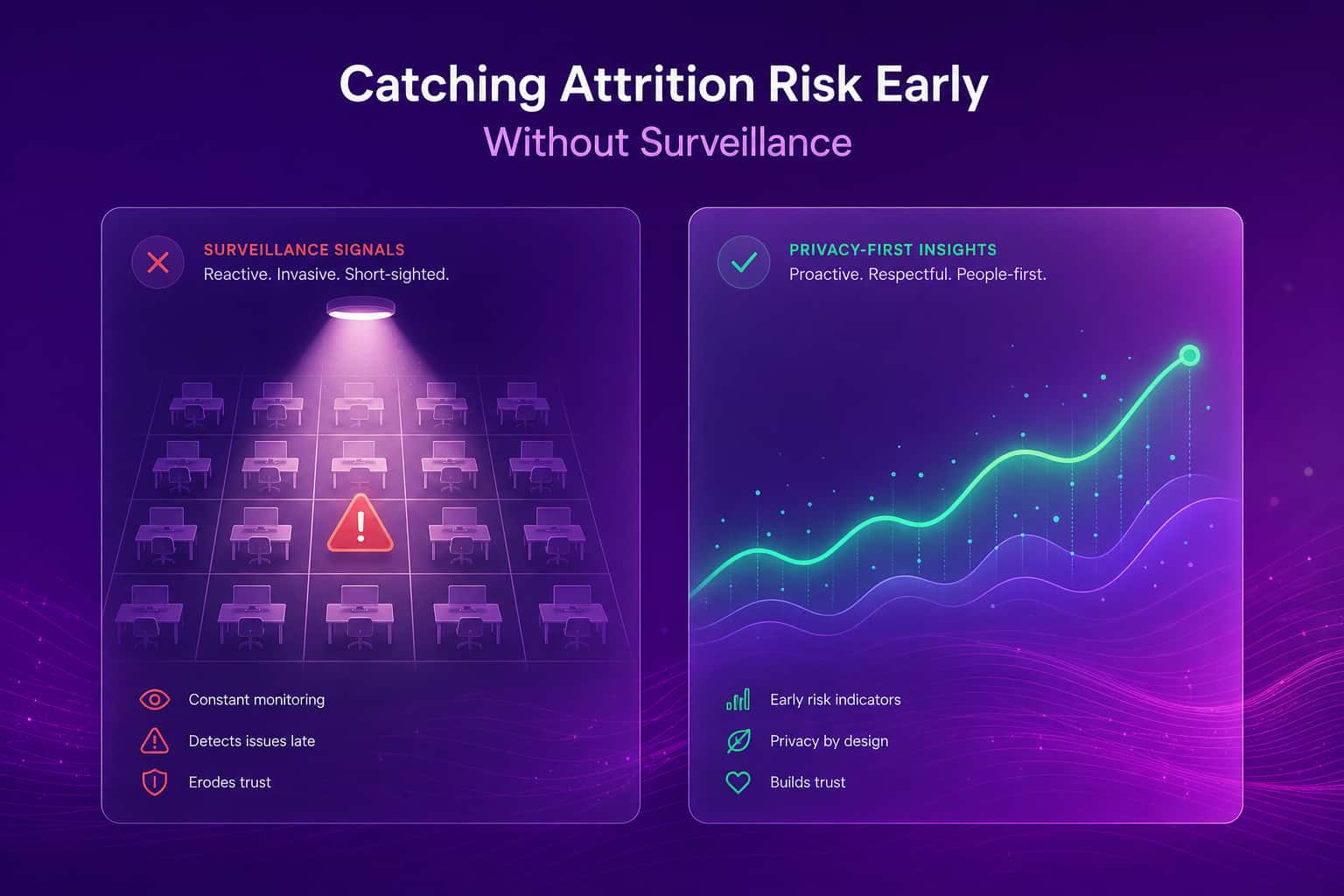
The instinct once a leadership team sees the calculator's total is to reach for more visibility, and the tool most operations leaders reach for first is employee monitoring software: screenshots, keyloggers, activity trackers. This is the wrong fix, and it's not a close call. There is no evidence that monitoring improves performance (Personnel Psychology meta-analysis), and 1 in 6 workers say they'd quit a job over being surveilled, which means the monitoring tool bought to reduce turnover cost can quietly increase it. Amir here: I built fraud-detection product at a company where "more monitoring" was the reflex answer to every risk problem, and the pattern held there too. Surveillance catches what already happened. It does nothing to catch what's about to happen, and it burns trust doing it.
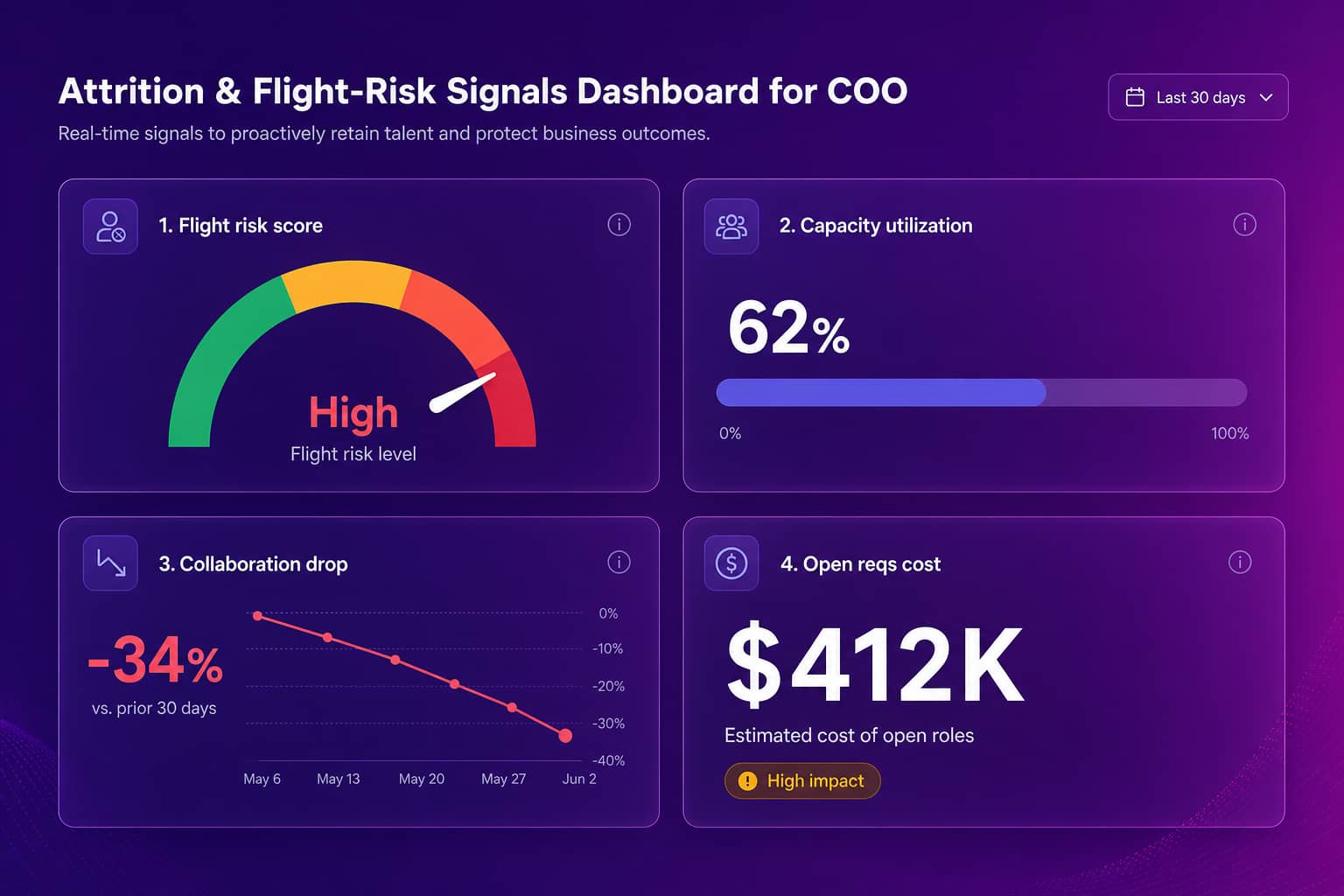
The signal that actually predicts turnover shows up months earlier, in the ordinary work data that already exists: a drop in collaboration activity, a capacity load that's been unsustainable for two sprints running, a Google Workspace engagement pattern that looks different from three months ago. None of that requires a screenshot. It requires connecting the tools a team already uses (GitHub, Jira, Google Workspace, Microsoft 365, the calendar) and looking at the pattern, not the content.
Employee monitoring tool
Abloomify
What actually moves the number down
Reducing the total your calculator returns means shortening the gap between "this person is under real strain" and "a manager knows about it." That gap is usually measured in months, not days, and it's rarely because managers don't care. It's because the evidence is scattered: sprint velocity in Jira, meeting load in the calendar, collaboration drop-off in Slack, a capacity number nobody has actually calculated since the last reorg. Building the leadership habit I actually believe in isn't more 1:1 coaching skill, it's killing the low-value chore of digging across five tools to answer a basic question like "who on this team is quietly overloaded right now," so the manager has time left over for the conversation that matters once they know.
Abloomify connects those signals (capacity utilization, collaboration patterns, meeting overload, and for engineering teams, delivery data from GitHub and Jira) without installing anything invasive, PII-free by architecture: no screenshots, no keyloggers, no content capture. Customers using the AI People Manager to act on the resulting engagement and burnout signals see turnover drop 62%, and the burnout-specific signals show up 60+ days before the pattern would surface through a survey or an exit interview.
Our employee retention software page covers the full flight-risk and retention-driver workflow, and our burnout detection guide walks through the specific signals that move 60+ days ahead of a resignation.
How to use the number with your board
A calculator total is only useful once it changes a conversation, and the conversation it should change is the one where retention gets treated as a soft HR line item instead of a budget line with a dollar figure attached. Take the total annual cost from the calculator, not the cost-per-departure figure, into the board or leadership meeting: a $1.2M annual turnover cost lands differently than "we lost 30 people last year." Pair it with a specific reduction target tied to a specific mechanism, not a vague "improve culture" initiative. If catching capacity strain two months earlier moves your voluntary turnover from 18% to 14%, that's a defensible, board-ready number, because it's tied to a mechanism a CFO can actually evaluate.
Big companies solve this with more process: an annual engagement survey, a retention committee, a slide in the next all-hands. Startups solve it by making the early signal show up automatically, before the exit interview gets scheduled. See how it works for operations leaders managing this exact tradeoff at a growing tech company.
FAQ
What does an employee turnover cost calculator actually measure?
It estimates two buckets: direct costs (recruiting, interviewing, onboarding, signing bonuses) and hidden costs (the empty-seat productivity gap, ramp time, lost institutional knowledge, and the load on the team covering the gap). Abloomify's calculator uses Gallup's 0.5x-2x salary multiplier and a 30% hidden-cost adjustment on top of direct costs.
Why does the same turnover rate cost more at a tech company than elsewhere?
Because tech salaries and specialization skew the multiplier up. A senior engineer replacement runs closer to 2x salary, and a six-month ramp on a distributed team is a real, measurable output gap, not a rounding error. A 15% turnover rate on a 200-person engineering org can represent seven figures a year once you run the actual numbers.
Does watching employees more closely lower the turnover number?
There is no evidence monitoring improves performance (Personnel Psychology meta-analysis), and 1 in 6 workers say they would quit over surveillance, which raises the number you are trying to lower. The lower-cost path is catching capacity strain and disengagement in the work signals that already exist, not adding a screenshot tool.
What is a realistic target for reducing turnover with better visibility?
Abloomify customers using the AI People Manager to act on engagement and capacity signals see a 62% reduction in turnover. The mechanism is earlier action on a real pattern, not a new HR policy: a manager sees the strain months before a resignation letter instead of finding out at the exit interview.
How accurate is a turnover cost calculator for planning purposes?
Accurate enough to put a real number in front of a board, not accurate enough to bet a specific hire's replacement cost on. It uses published research multipliers against your actual headcount and salary bands, so it beats a guess by a wide margin, but your real number depends on how specialized your roles are and how long your open reqs actually sit.

Amir Tavafi
Co-Founder & CEO
Product leader and innovator with over 15 years of experience in the tech sector, grounded in AI and robotics. Previously led product development in fraud detection and AI solutions at Nasdaq Verafin.