Time Theft at Work: What It Is and the Privacy-First Fix
July 10, 2026
Amir Tavafi
9 min read

Search "time theft" and every result tells the same story: your employees are stealing minutes, and you need software to catch them. For hourly and shift work, padded timesheets are a real payroll problem worth fixing. For salaried knowledge and engineering teams, the surveillance cure costs more than the disease. Roughly 1 in 6 workers would quit over monitoring, and Abloomify was built to show where output actually leaks without any of it.
Key Takeaways
Q: What is time theft?
A: Time theft is getting paid for time you did not work, through padded timesheets, buddy punching, or logged hours with no output. It is a real issue for hourly work. For salaried teams, it is usually a symptom of unclear expectations rather than crime.
Q: Is time theft illegal?
A: Time theft is rarely a standalone crime. In the US it is usually an employment and payroll matter that can justify termination, and large-scale falsification can rise to wage fraud. Laws vary by state, so treat this as context, not legal advice.
Q: How do you stop time theft without surveillance?
A: Measure outcomes instead of minutes. Abloomify reads PII-free work signals from 100+ integrations, with no screenshots or keyloggers, and surfaces delivery, capacity, and after-hours load, so you see where output leaks without turning your team into suspects.
Q: Does employee monitoring reduce time theft?
A: There is no evidence that monitoring improves performance, per a Personnel Psychology meta-analysis. Surveillance tools like ActivTrak or Time Doctor log activity, and activity is not output. They add distrust while the real capacity waste stays hidden.
What is time theft?
Time theft is when an employee receives pay for time they did not actually spend working, whether by rounding up a timesheet, having a coworker clock in for them, taking long breaks off the clock, or logging hours that produced nothing. It is a legitimate concern in hourly, shift, and field work, where pay is tied directly to recorded time and a padded timesheet is money out the door. The trouble starts when leaders drag the same concept into salaried knowledge work, where nobody is paid by the punched hour. On an engineering or operations team, "hours at the desk" was never the thing you bought. You bought shipped features, closed deals, and problems solved. Counting minutes there measures the wrong thing, and the tools sold to count them create a second problem that is often bigger than the first.
Is time theft illegal, and can you be fired for it?
Time theft is rarely a criminal offense on its own, and the dramatic search results asking whether you can go to jail for it are mostly overselling the risk. In the US, it is typically treated as an employment and payroll matter: an employer can discipline or terminate someone for deliberately misreporting hours, and can pursue repayment of wages paid for time not worked. It crosses into legal exposure when the falsification is systematic and large, at which point it can be framed as wage or timesheet fraud rather than a policy violation. Salaried exempt employees add another wrinkle, because they are paid for the job, not the hour, so the "stolen minutes" framing barely applies. Rules vary by state and by how someone is classified, so this is background context, not legal advice. The practical takeaway is simpler: for most salaried teams, chasing time theft as a compliance problem solves less than fixing why the work is not getting done.
The most common types of time theft at work
The recognized types of time theft cluster into a handful of patterns, and only some of them matter once you leave hourly work behind. Buddy punching is one worker clocking in for another. Timesheet rounding and padding is inflating recorded hours a few minutes at a time. Ghost hours are logged time with nothing to show for it. Extended or unlogged breaks stretch paid time without the paid work. Then there is the salaried-team version nobody puts on the poster: busywork theater, where a person optimizes for looking present in chat and calendar instead of producing anything, and in remote setups, over-employment, where someone quietly holds a second full-time job on your clock. Abloomify closed its only cold-outbound enterprise deal on exactly that last pattern, with a subject line about quiet quitters and over-employed staff at a 3,500-person company.
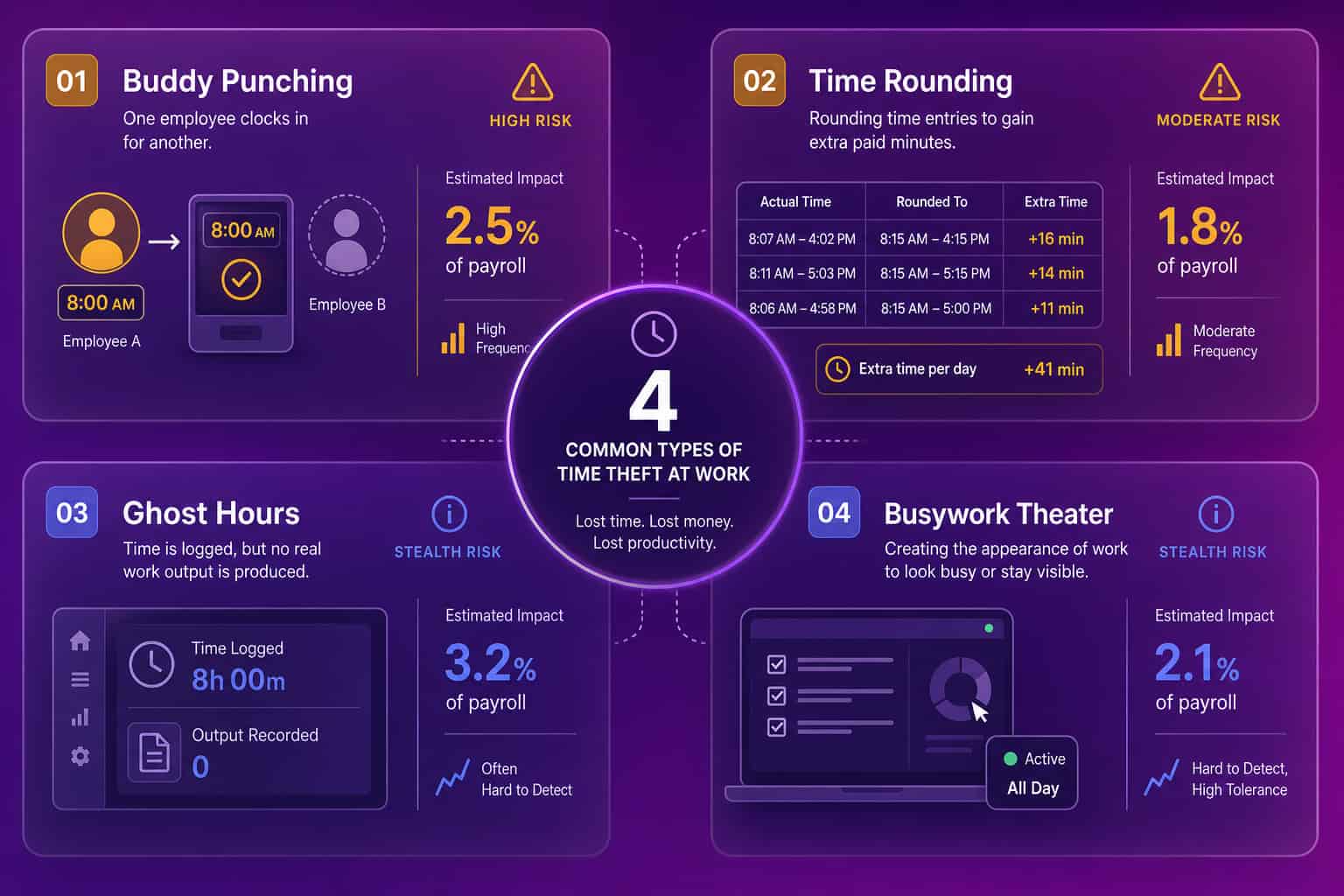
The pattern that costs a modern tech company the most is not the hourly worker rounding up fifteen minutes. It is the salaried role producing very little while looking perfectly busy, because that person's "time theft" is invisible to a time clock and huge on the balance sheet.
Why the surveillance cure backfires
The reflex answer to time theft is a monitoring tool, and for salaried knowledge teams that reflex makes things worse. Vendors like ActivTrak, Insightful, Time Doctor, and Hubstaff sell time-theft prevention through activity tracking, idle detection, and in some cases screenshots and keystroke logging. The problem is that activity is not output. A dashboard full of green "active" bars tells you a keyboard moved, not that anything valuable happened, and it is trivial to look busy while delivering nothing. Meanwhile the tool itself carries a cost that rarely shows up in the sales deck. There is no evidence that monitoring improves performance, per a Personnel Psychology meta-analysis, and roughly 1 in 6 workers say they would quit over surveillance, per 2026 survey research. So you install spyware to recover a few padded minutes and risk losing your best engineer, who reads the install as a statement that you do not trust her.
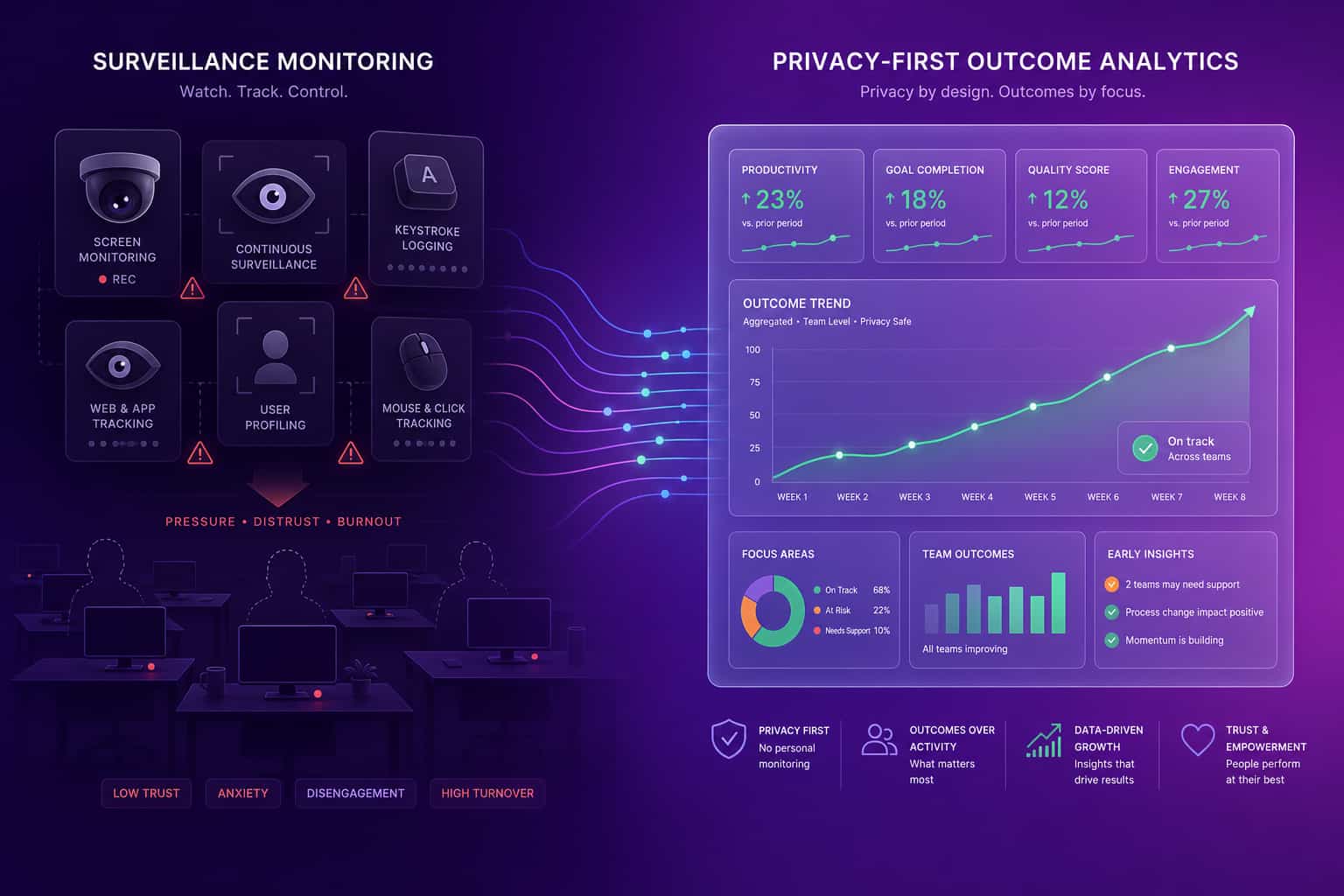
Time theft is the wrong metric for salaried teams
For salaried work, "time theft" is a distraction from the metric that matters, which is output leakage: the gap between what you pay for and what actually gets delivered. When we started Abloomify I assumed the job was watching how people spent their hours. The more we shipped, the clearer it got that hours are noise. A senior engineer using Cursor can produce two people's worth of output in a focused morning, then spend the afternoon in low-value meetings that make her look maximally "active" while nothing ships. A time clock rewards the afternoon and misses the morning. That is backwards. The leaders I talk to do not lie awake worrying that someone took a long lunch. They worry that a whole team is busy and nothing is moving, that capacity is quietly leaking across meetings and context switches and duplicated tools, and that they cannot see it. That leak runs $500K to $2M a year in wasted capacity at a mid-size company, and no screenshot tool will ever find it.
How to reduce time theft without spying on anyone
You reduce real time theft, and the far larger output leakage behind it, by measuring what people deliver rather than surveilling how they sit. Abloomify connects to Google Workspace, Microsoft 365, GitHub, Jira, CRM, and more through 100+ PII-free API integrations, with an optional device agent that reports aggregated usage and carries no screenshots, no keyloggers, and no screen recording. Instead of an activity feed, you get delivery signals, capacity utilization, meeting load, and after-hours trends per team, so an under-performing salaried role or a quietly over-employed one shows up in the output, not in a webcam still. A 3,500-person enterprise used exactly this to run a quiet-quitter and over-employment diagnostic on Google Workspace data, and a 400-person fintech uses it to see where capacity is piling up before it turns into waste or burnout.
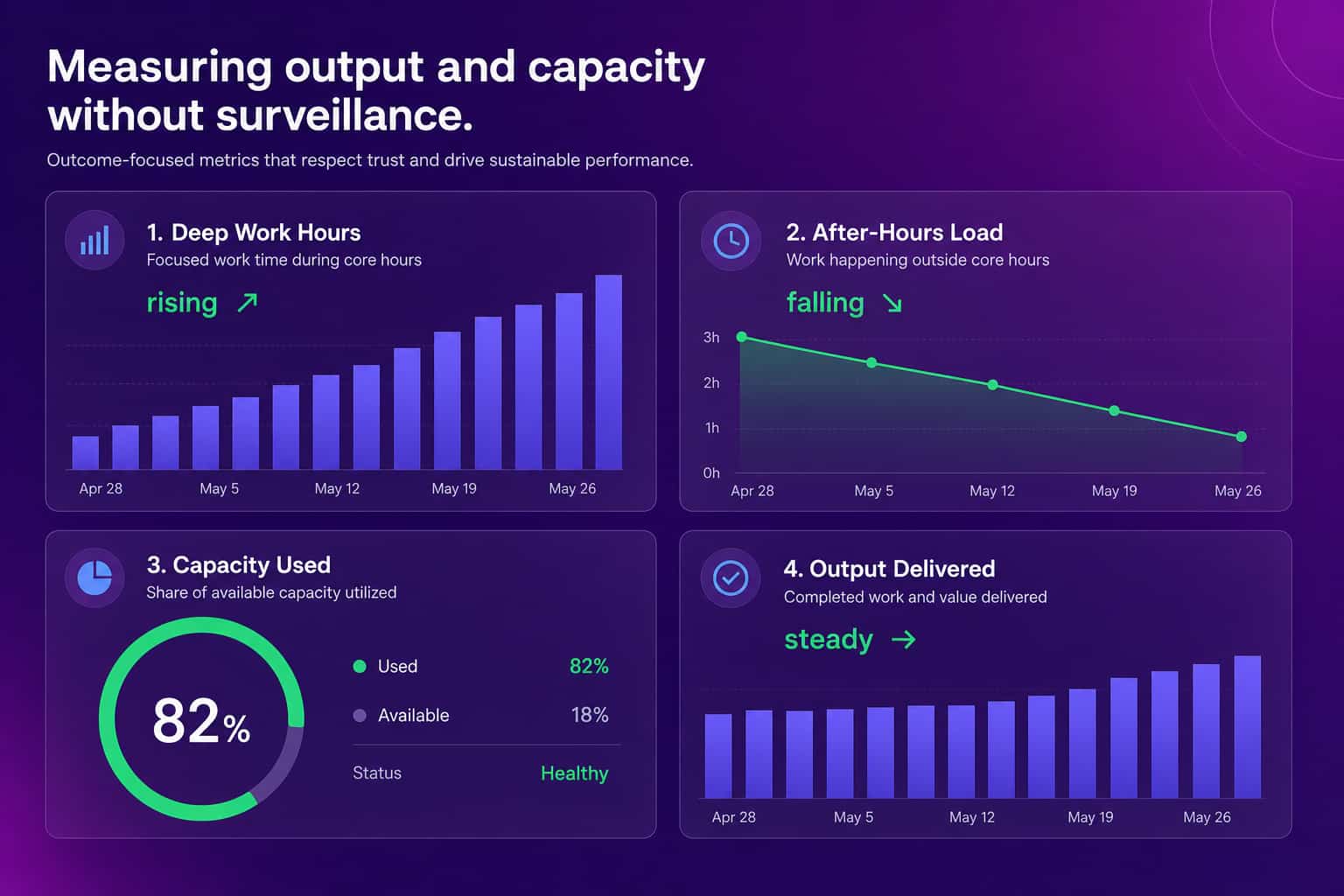
This is the same posture behind our employee productivity software and our guide to measuring productivity without screenshots. Measure outcomes, protect focus time, and rebalance load, and the padded-minutes problem mostly takes care of itself, because a team that is clear on what it owes and honestly loaded has little to hide and little reason to coast.
Activity surveillance (ActivTrak, Time Doctor, Hubstaff)
Outcome analytics (Abloomify)
If you still run hourly or shift teams, keep a clean timekeeping process for them. Just do not aim it at your salaried engineers and operators, where it measures the wrong thing and quietly taxes trust. For a fuller side by side, see our Abloomify vs Time Doctor comparison and our workforce analytics overview. Count minutes for the people you pay by the minute. Count outcomes for everyone else.
FAQ
Is time theft a real crime?
Time theft is rarely charged as a standalone crime. In the US it is usually handled as an employment and payroll matter, and it can justify discipline or termination. Systematic, large-scale falsification of hours can be treated as wage or timesheet fraud, which does carry legal weight. Rules vary by state and by employee classification, so treat this as general context, not legal advice.
Can you be fired for time theft?
Yes. Most employers treat deliberate misreporting of hours as a policy violation that can lead to termination, and they may seek repayment for time paid but not worked. How it plays out depends on your handbook, local law, and whether the person is exempt or non-exempt. For salaried teams, a repeated pattern of non-delivery is usually the more useful thing to address than the minutes themselves.
What are some examples of time theft?
Common examples include buddy punching, rounding or padding a timesheet, taking long unlogged breaks, and logging hours with no output. The version specific to salaried remote work is busywork theater, looking active in chat and calendar while producing little, and over-employment, holding a second full-time job on your clock. The last one is often the most expensive and the hardest to see with a time clock.
How do you detect time theft on a remote salaried team?
Look at outcomes, not activity. Abloomify reads PII-free signals from 100+ work tools, with no screenshots or keyloggers, and tracks delivery, capacity, and after-hours load over time. A role that is consistently absent from the output, or a person whose signals suggest a second job, surfaces in the work data itself, without surveilling anyone's screen.

Amir Tavafi
Co-Founder & CEO
Product leader and innovator with over 15 years of experience in the tech sector, grounded in AI and robotics. Previously led product development in fraud detection and AI solutions at Nasdaq Verafin.