Developer Productivity Tools: 7 That Actually Move the Needle (2026)
August 5, 2026
Amir Tavafi
13 min read

Most "developer productivity tools" lists are IDE plugins and note-taking apps. The list below has those, but it also has something most lists skip: a way to tell whether any of them are working. Abloomify measures PR cycle time, DORA metrics, and AI tool ROI straight from GitHub, without reading a line of code.
Key Takeaways
Q: What's the single most useful developer productivity tool for an engineering leader in 2026?
A: If you already have an editor, a terminal, and a task tracker, the highest-leverage addition is visibility: something that shows PR cycle time, review bottlenecks, and whether your AI coding tools are paying off. Abloomify computes all four DORA metrics and human vs AI contribution directly from GitHub.
Q: Are AI coding assistants like Cursor and Copilot worth the license cost?
A: For most teams, yes, but the honest answer requires data, not a survey. Abloomify imports usage from Cursor, Claude Code, and GitHub Copilot and correlates it against PR cycle time and code velocity, so "worth it" becomes a number instead of a vibe.
Q: Do developer productivity tools require watching what engineers type?
A: No. Abloomify's architecture is PII-free: 100+ API integrations plus optional device agents that read aggregated signals, never screen content, keystrokes, or code. It is SOC 2 Type II certified and was built specifically to avoid the surveillance tools that generate developer resistance.
Q: What should a VP of Engineering measure before buying more tools?
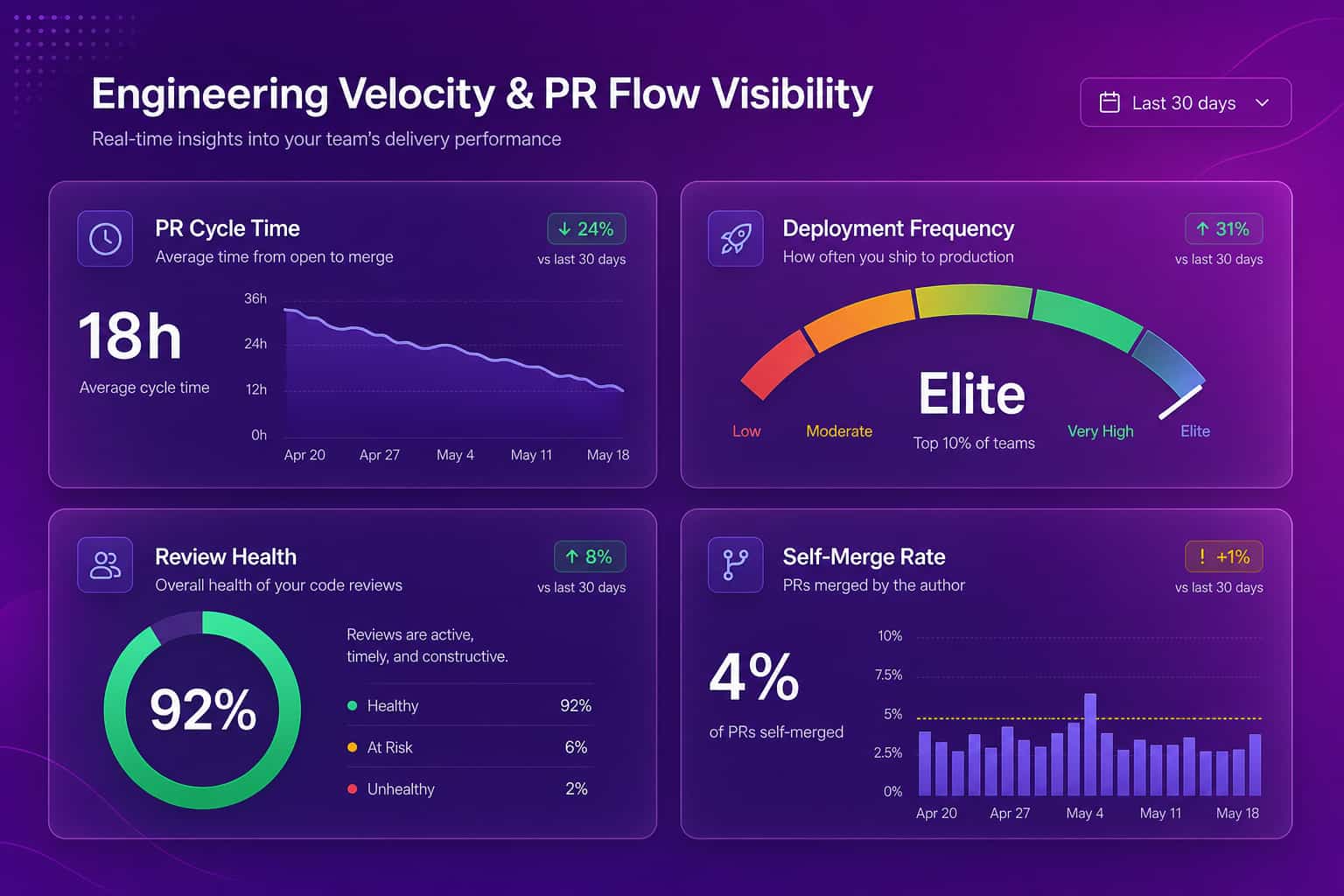
A: Start with what's already broken: PR cycle time, time to first review, self-merge rate, and deployment frequency banded against the DORA scale. A 50-person SaaS customer validated this data against their own manual spreadsheet analysis before trusting it for decisions.
Why most "developer productivity tools" lists miss the point
A typical list here hands you seven IDE extensions and calls it a day, and every one of them assumes the bottleneck is how fast an individual developer can type. That first sentence describes the actual failure mode of this entire content category: writing code was never the bottleneck for most engineering teams past a certain size, and a list built around editors and terminals answers a question nobody with a distributed team of engineers is actually asking. The real questions sound more like: why does a PR sit in review for three days when the code took twenty minutes to write? Is the growing Cursor and Copilot line item on the AI tool budget (companies now run 7+ AI tools on average, up from 2 in 2023) showing up anywhere besides the invoice? Who is quietly carrying twice the workload of the person next to them? None of that gets answered by a faster autocomplete.
I've watched this play out with our own team. Big companies bring ceremony. Startups bring outcomes, or they should, but only if someone is actually watching the outcomes and not just the tool adoption numbers. So this list splits into two categories on purpose: tools that help an individual engineer move faster, and the layer that tells a leader whether that speed is real. Most vendors avoid putting those two categories on the same page because the second one tends to expose how little the first one is measured. We don't have that problem, so here's the full list.
1. Abloomify: the engineering visibility layer other tools don't have
Abloomify is the one entry on this list that isn't trying to help an engineer write code faster. It connects to GitHub, GitLab, Bitbucket, Jira, and Linear through API integrations and computes all four DORA metrics (deployment frequency, lead time, change failure rate, MTTR) straight from GitHub, each banded Elite to Low, alongside PR flow analytics (cycle time, time to first review, self-merge rate, PR size) and CI/CD pipeline health with flaky-test detection. It also separates human vs AI agent contribution across code, PRs, and reviews, and imports usage from Cursor, Claude Code, and GitHub Copilot to correlate AI tool spend with actual output. None of this requires reading code content: the architecture is PII-free by design, no screenshots, no keyloggers, no screen recording, and it's SOC 2 Type II certified.
A 50-person Canadian SaaS company runs its engineering metrics through Abloomify today, connecting GitHub and Jira alongside device agent insights for capacity utilization. Their COO validated the numbers against a manual spreadsheet before trusting the automation. Their quote: "What I did manually this week in a spreadsheet is exactly what I think Abloomify should be doing automatically." That's the bar. Not a prettier dashboard, the same numbers a careful person would have produced by hand, arriving without the hand.
Where it fits on this list: everything else here helps a developer or a team move. Abloomify is how a VP of Engineering knows whether that movement is adding up to anything, including whether the other six tools on this list are earning their budget line.
2. Cursor: the AI-native editor that's actually changed how we ship
Cursor's first sentence deserves to be direct: it's an AI-native code editor built on top of VS Code that lets an engineer describe intent and get working code changes across a whole codebase, not just single-line autocomplete, and for teams that adopt it seriously it changes the daily shape of writing software more than any other tool on this list. I switched our own team from GitHub Copilot plus ChatGPT to Cursor early this year, after getting tired of stitching two tools together to do one job, and it turned into the best product decision Abloomify made that year. Our shipping pace picked up in a way that was obvious inside a few weeks, not because Cursor is magic, but because an editor built around AI-assisted change requests removes a lot of the copy-paste friction that Copilot-plus-ChatGPT never solved.
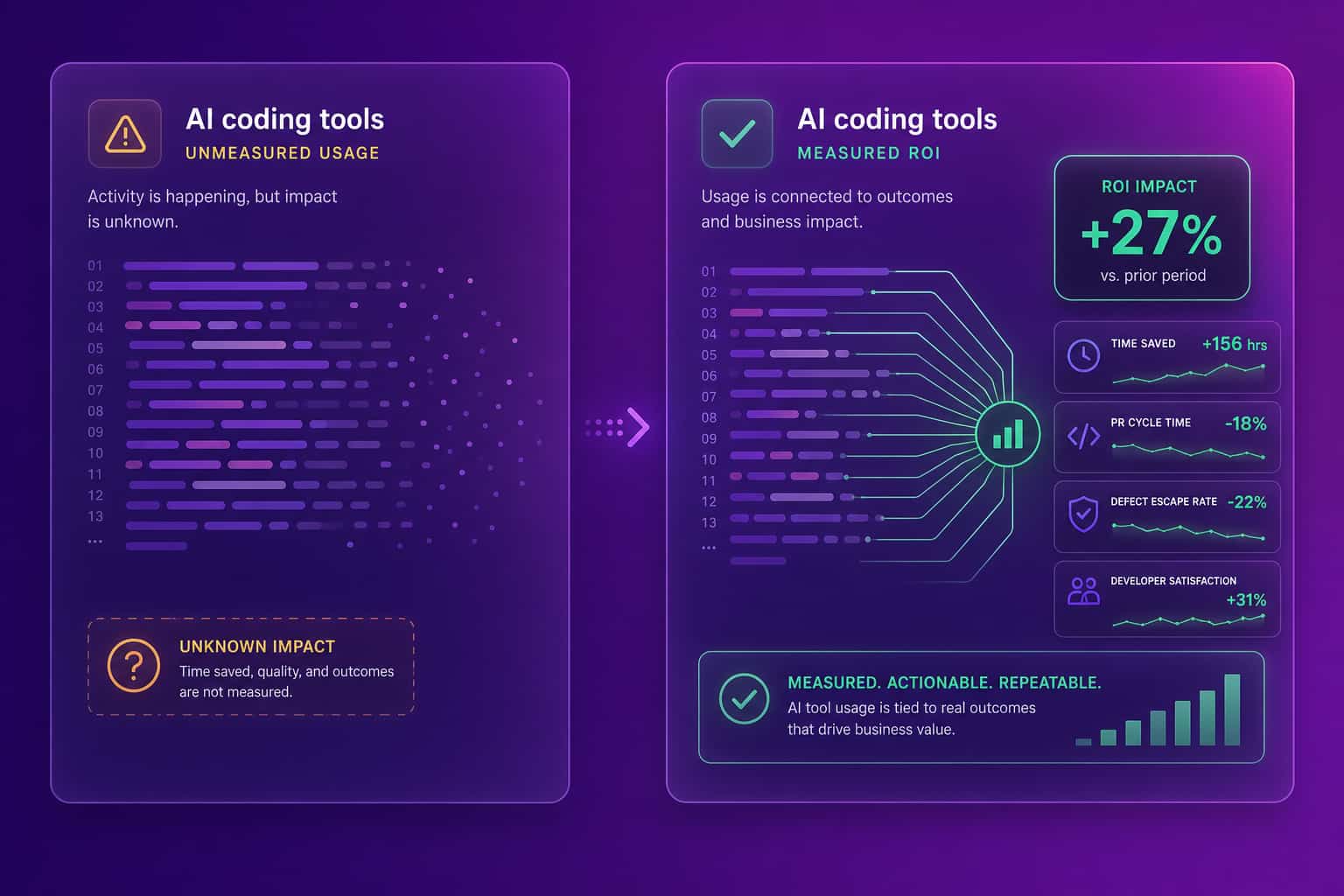
The honest caveat: "our velocity felt faster" is not a number a board wants to see in a slide. That's where pairing Cursor with something like Abloomify's Cursor integration matters. Abloomify imports Cursor usage and correlates it against PR cycle time and code velocity, so the claim "this tool is working" comes with a cohort comparison instead of a founder's word for it.
3. GitHub Copilot: the default, and the ROI question nobody's answering
GitHub Copilot is the AI pair programmer most engineering orgs already have a license for, built into VS Code, JetBrains, and Neovim, and its first sentence is the one that matters for a leadership audience: broad Copilot adoption inside an org tells you almost nothing about whether it's making anyone faster, because seat counts measure access, not output, and access is the easiest number in the building to inflate. That gap is exactly what shows up when a CTO gets asked "what's our AI tool ROI" and has no answer beyond "engineers say it's helpful," which is the same self-report problem every AI-adoption survey runs into, and the same reason ActivTrak's newly launched AI Insights feature stops at surface-level app usage instead of engineering output. A license count on a finance spreadsheet and an actual productivity lift are two different claims, and only one of them is easy to prove without data.
Abloomify closes that gap the same way it does for Cursor: usage data imported and correlated against engineering output, with an AI-vs-human cohort comparison that answers whether heavy Copilot adopters actually ship more and review faster, or just generate more code that someone else has to read.
4. Linear: issue tracking built for speed, not ceremony
Linear is a project and issue tracker built specifically to be fast: keyboard-first navigation, opinionated workflows, and none of the multi-tab configuration overhead that turns most task trackers into their own source of busywork, and for engineering teams tired of Jira's ceremony it's often the single biggest reduction in tool-related friction they'll make all year. It doesn't try to be an analytics platform, and it shouldn't, because a tracker that also tries to be a reporting layer usually ends up worse at both jobs. Abloomify connects to Linear (alongside Jira and Asana) as one of its 100+ integrations, reading sprint delivery signals opt-in per company without adding a second place for engineers to update status. The tracker stays the tracker. The reporting happens somewhere that doesn't slow anyone down to produce it.
5. Warp: a terminal that stops context-switching
Warp is an AI-native terminal that adds command search, shareable blocks, and natural-language-to-command translation on top of a normal shell, and its value shows up less in raw speed than in reduced context switching: fewer trips to a browser tab to remember a flag, fewer half-remembered git incantations copied from old notes, fewer minutes lost re-deriving a command someone on the team already solved last month. It's a small tool on a list with bigger claims, but "developer productivity tools" lists that skip the terminal are skipping where a meaningful share of a working day actually happens. None of that shows up in a sprint report, which is exactly the kind of quiet time-saver that only becomes visible in aggregate, across a whole team, over a whole quarter.
6. GitHub Actions: CI/CD that only helps if it's healthy
GitHub Actions is the CI/CD platform most teams already run their pipelines on, and it's a genuine productivity tool right up until a flaky test starts eating an hour of every engineer's day in reruns nobody's tracking. That's the part a CI/CD tool itself won't tell you: pipeline health, not just pipeline existence. Abloomify's engineering intelligence layer includes CI/CD pipeline health with flaky-test detection, plus security posture from Dependabot and code scanning ranked by CVSS severity and EPSS exploit probability, in the same place as delivery metrics, so a slipping pipeline shows up next to the DORA numbers it's dragging down instead of buried in a separate Actions tab nobody checks.
7. Jellyfish: solid engineering analytics, narrow by design
Jellyfish is a pure-play engineering analytics platform: DORA-style dashboards, investment tracking by initiative, and a reasonable job of showing where engineering time goes. It's a legitimate tool, and worth including on this list because the honest comparison matters more than pretending the category doesn't have other players. Where it stays narrow is the same place most engineering-only tools stay narrow: no AI-vs-human contribution split, no AI coding tool ROI, and no connection to the broader workforce context (capacity, meeting load, cross-team collaboration) that engineering data lives inside. Abloomify ties the same delivery signal to that wider picture. See the full breakdown between the two.
How to actually evaluate developer productivity tools for your team
Skip the feature checklist and start with the question a tool has to answer, because that first sentence is the whole evaluation framework condensed: does this tool make an individual faster (an editor, a terminal, a linter), does it remove friction from how work moves between people (an issue tracker, a CI/CD platform), or does it tell a leader whether the first two categories are actually working (an engineering intelligence layer)? Most teams have the first two categories covered and none of the third, which is why AI tool budgets keep growing while almost nobody can answer "is it working" with a number instead of a shrug. Buy tools in the first two categories based on what your engineers prefer, because that's a taste and workflow decision they're closest to. Buy the third category based on whether it can answer questions your board is already asking: what's our PR cycle time, are we Elite or Low on DORA, and is the AI coding tool spend showing up in output.
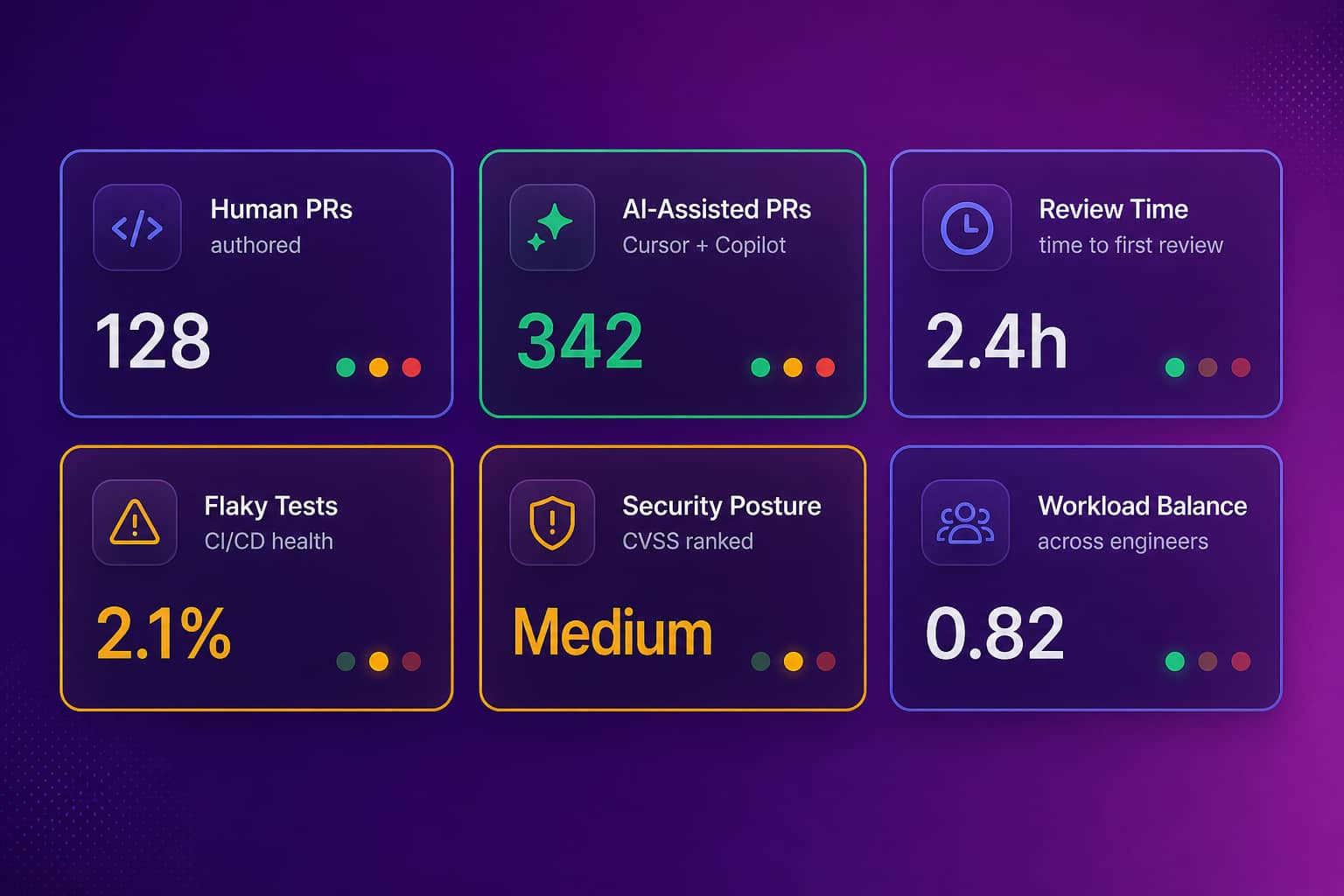
Small companies win here because they can move faster than the tool sprawl big companies accumulate. You don't need seven dashboards to answer "is engineering healthy this quarter." You need the tools your team actually likes writing code in, a tracker that doesn't get in the way, and one place that turns the exhaust from both into numbers a leader can act on.
FAQ
What are the best developer productivity tools in 2026?
It depends on the gap you are closing. Cursor and GitHub Copilot speed up writing code. Linear and GitHub Actions speed up moving and shipping it. None of them tell you if any of that translated into real engineering output. That is the layer Abloomify adds: DORA metrics, PR flow, and human vs AI contribution, computed straight from GitHub.
Do AI coding tools like Cursor and Copilot actually make developers faster?
Often, yes, but "often" is not a metric. Abloomify imports usage data from Cursor, Claude Code, and GitHub Copilot and correlates it with PR cycle time, review health, and code velocity, so you get an AI-vs-human cohort comparison instead of a gut feeling about whether the tool is earning its license cost.
How is Abloomify different from a developer productivity tool like Linear or GitHub Actions?
Linear and GitHub Actions are where work happens. Abloomify is not another place work happens. It connects to GitHub, Jira, Linear, and your AI coding tools through 100+ API integrations and turns the exhaust from those tools into DORA metrics, PR bottleneck maps, and AI tool ROI, all from data those systems already produce.
Can developer productivity tools work without monitoring or surveillance?
Yes. Abloomify reads work signals through APIs and PII-free device agents: no screenshots, no keyloggers, no screen recording, no code content. It measures how work moves (PR timing, review patterns, deployment cadence) instead of watching what an engineer typed, which is the difference between visibility and surveillance.
What is the difference between an engineering analytics tool like Jellyfish and Abloomify?
Jellyfish is engineering-only: strong on DORA-style dashboards, narrow beyond that. Abloomify ties the same engineering signal (PR cycle time, DORA bands, CI/CD health) to broader workforce context, capacity, meeting load, and AI tool ROI, plus human vs AI agent contribution tracking, which pure engineering-analytics tools do not offer.

Amir Tavafi
Co-Founder & CEO
Product leader and innovator with over 15 years of experience in the tech sector, grounded in AI and robotics. Previously led product development in fraud detection and AI solutions at Nasdaq Verafin.