Best AI Adoption Measurement Tools for Legal & Compliance (2026)
April 17, 2026
Walter Write
5 min read

Legal and compliance teams need governance-first AI measurement: policy adherence, redaction efficacy, audit completeness, and vendor risk. Abloomify's AI Chief of Staff, Bloomy, gives compliance leaders instant answers about AI governance and risk posture across all connected tools, on demand.
Key Takeaways
Q: What are the must‑track governance signals?
A: Policy adherence rate and severity, redaction efficacy, audit completeness (who/what/when/why), vendor risk posture, and data residency.
Q: How to operationalize reviews?
A: Route high‑risk prompts/responses to reviewers, log decisions immutably, and report adherence trends to leadership.
Q: What defines “safe adoption”?
A: ≥98% adherence with zero critical data exposure incidents and complete audit evidence for all AI‑assisted outputs.
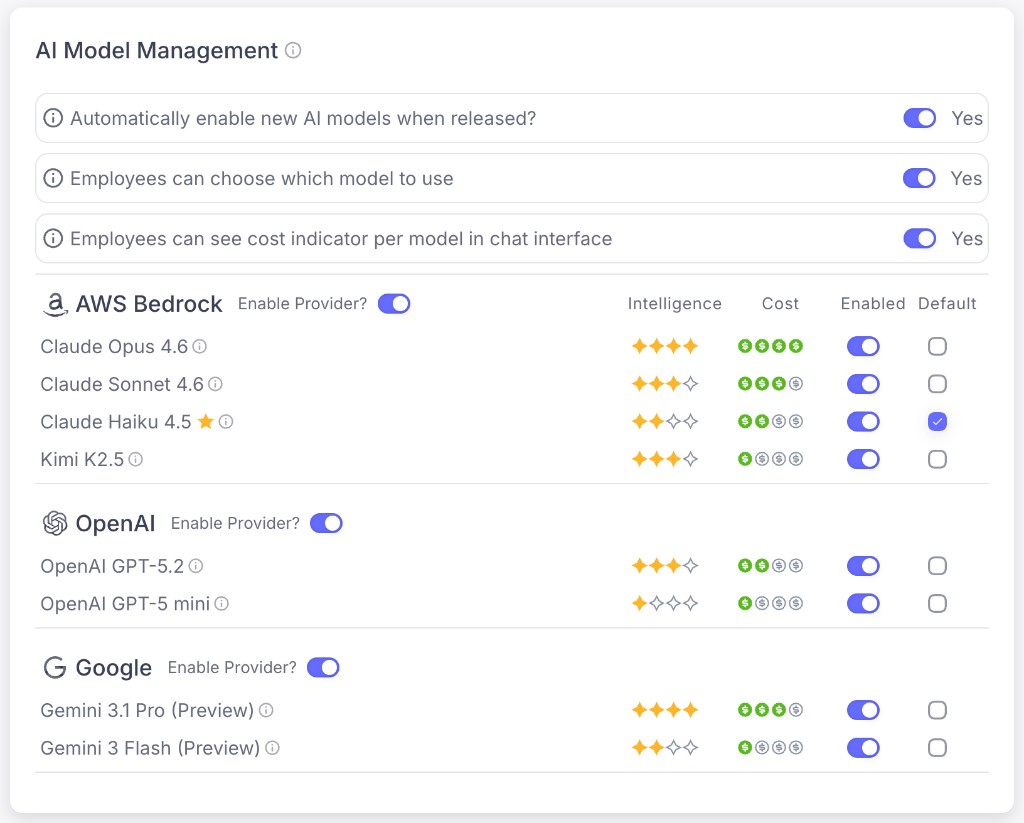
Example: policy adherence, redaction efficacy, and review evidence
Which governance signals should we track?
- Policy adherence rate and violation severity trend
- Prompt/response redaction efficacy; secrets and PII protection
- Audit completeness: immutable logs, reviewer evidence, retention policies
- Vendor risk posture and data residency adherence
How do tools compare at a glance?
| Capability | Abloomify Governance Analytics | Assistant Policy Console | DLP/SIEM |
|---|---|---|---|
| Adoption coverage | Function/team | User events | Org‑wide detections |
| Policy analytics | Yes | Events only | Alerts only |
| Audit completeness | Yes | Partial | Partial |
What targets are reasonable?
- ≥98% policy adherence with automatic redaction
- Zero critical data exposure incidents
Abloomify centralizes adoption and governance signals without invasive monitoring, giving legal/compliance a single view of risk posture. Explore solutions/data-driven-leadership.
How should we choose legal/compliance AI measurement tools?
Integrate assistant consoles, DLP/SIEM, ticketing, and policy systems so you can prove adherence, redaction efficacy, and audit completeness.
- Policy adherence rate with severity and topic mapping
- Prompt/response redaction coverage and false‑negative checks
- Immutable logs, reviewer evidence, and retention policies
- Vendor risk posture tracking and data residency controls
- Approval workflows for high‑risk topics and regulated regions
- Low overhead for reviewers; exports for audits
How should we roll out and measure in 8 weeks?
Week 1: Baseline policy adherence and redaction coverage across two functions.
Week 2: Route high‑risk prompts to reviewers; standardize decision evidence.
Week 3: Add topic mapping and severity trends for leadership reports.
Week 4: Snapshot results; fix noisy rules that cause alert fatigue.
Week 5–6: Expand reviewers and automate safe approvals; keep audit exports.
Week 7: Run a vendor risk review for models and data processors.
Week 8: Executive checkpoint; set adherence and incident targets.
Week 2: Route high‑risk prompts to reviewers; standardize decision evidence.
Week 3: Add topic mapping and severity trends for leadership reports.
Week 4: Snapshot results; fix noisy rules that cause alert fatigue.
Week 5–6: Expand reviewers and automate safe approvals; keep audit exports.
Week 7: Run a vendor risk review for models and data processors.
Week 8: Executive checkpoint; set adherence and incident targets.
What pitfalls should we avoid, and how do we fix them?
- Counting events instead of risk → track severity and exposure potential.
- Hidden data paths → verify residency and processor scopes; update records.
- Reviewer overload → narrow high‑risk topics and improve redaction patterns.
FAQ
Q: Can we block unsafe prompts without stopping innovation?
A: Yes, use targeted policies, redaction, and reviewer queues for sensitive categories. Allow low‑risk prompts to flow.
Q: How do we prepare for audits?
A: Keep immutable logs with who/what/when/why, reviewer notes, and retention policies per region.
See a governance‑first rollout template at request-demo.
What does “good” look like by function?
Commercial and NDAs
- Turnaround time down with high adherence; sensitive terms flagged
- Reviewer evidence complete; redaction efficacy holds
Vendor papering and DPIAs
- Risk categorization consistent; approvals logged with retention
- Data residency and processors verified
Marketing and claims review
- Time to approve compliant copy; high‑risk claims routed correctly
- Audit exports ready for campaigns
What operating cadence keeps momentum?
- Weekly: adherence snapshot and redaction efficacy checks for sampled prompts.
- Monthly: reviewer calibration on severity and topics; retire noisy rules.
- Quarterly: vendor risk and residency review with updated records.
What does our measurement glossary include?
- Policy adherence: share of prompts/responses passing rules.
- Redaction efficacy: success in masking secrets and PII without false negatives.
- Severity: business impact category for violations.
- Audit completeness: who/what/when/why captured with retention policy.
- High‑risk topics: categories requiring reviewer approval (e.g., regulated claims).
- Residency: jurisdictional requirements for data storage/processing.
- Vendor posture: security and privacy profile for processors and tools.
What did a pilot achieve?
A global company introduced reviewer queues for high‑risk topics and tightened redaction patterns. Policy adherence reached 99 percent with zero critical exposure incidents in two quarters. Because evidence was captured in the workflow, audit prep time dropped dramatically for both marketing campaigns and vendor reviews.
FAQ
Q: How strict should we be with high‑risk topics?
A: Start strict to build trust, then narrow the scope as adherence improves and redaction efficacy is proven.
Q: Can we store prompts and responses indefinitely?
A: Keep only what is necessary for audit and improvement, with retention rules by region and topic.
Q: How do we align with security teams?
A: Share adherence and incident trend reports, and integrate DLP/SIEM alerts with reviewer workflows.
What’s our definition‑of‑done checklist?
- □High‑risk topics defined; reviewer queues in place
- □Redaction patterns tuned; false‑negative checks scheduled
- □Immutable logs and retention policies configured
- □Vendor risk and residency records updated quarterly
- □Leadership report on adherence and incidents delivered monthly
Link to related pages: solutions/data-driven-leadership and blog.
What are the next steps?
Define high‑risk topics, enable reviewer queues, and run a four‑week snapshot of adherence and redaction efficacy. Share a leadership report and tune noisy policies before expanding to more functions and regions.
Which data sources and integrations do we use?
- Assistant consoles for prompt/response telemetry and policy events
- DLP/SIEM for exposure detections and anomaly patterns
- Ticketing for reviewer workflows and evidence
- Contracting systems for vendor and agreement metadata
- Identity and region policies to enforce residency and access
What targets are reasonable for pilots?
- ≥98% policy adherence and zero critical exposure incidents
- Reviewer turnaround time improved 20–30% with queues and templates
- Redaction efficacy measured and improved quarter over quarter
What leadership reporting should we use?
Provide a monthly summary: adherence trend with severity, redaction efficacy checks, reviewer turnaround, and any incidents with root causes and mitigations. Include a short backlog list for policy updates.
Want a governance‑first pilot that captures audit evidence by default? Book a short session at request-demo.

Walter Write
Staff Writer
Tech industry analyst and content strategist specializing in AI, productivity management, and workplace innovation. Passionate about helping organizations leverage technology for better team performance.